
August Plots And Pies
It still hasn’t gotten any cooler in North Carolina! We had so many days of real-feel over 100 degrees. Despite that, I still baked a good amount! It’s also a good excuse to sit in the air conditioning and enjoy reading
It still hasn’t gotten any cooler in North Carolina! We had so many days of real-feel over 100 degrees. Despite that, I still baked a good amount! It’s also a good excuse to sit in the air conditioning and enjoy reading.
August started with a trip to Vermont to see one of our dearest family friends get married. Her sister E is a life-long friend of mine and enjoys reading just as much as I do. We briefly discussed Yesteryear and decided we needed a whole debrief some other time. She joined my sister M and I’s virtual book club and she is an amazing addition! Our August book was The Sisterhood Of Ravensbruck by Lynne Olson. Our experience was overall positive but we also talked about how deeply sad and tragic it is. The book is an account of the all women’s camp in Northern Germany during WWII and was primarily inhabited by French women. The book details the work they did to continue resisting and all the horrors that the women experienced. I’ve probably said this a hundred times but I am always curious in other perspectives and in hearing the more unknown stories. There were a lot of interesting things, including more about the absolutely barbaric experience of Polish women than I originally knew, the amazing sisterhood that was founded at the camp and continued on after the war ended, and further emphasized how absolutely and unbelievably brave these women were. I learned that the women there wrote their own kind of musical, which later became Le Verfügbar aux Enfers, a show that played in France and was also translated into English and performed under the name In The Underworld in the United States. I am still trying to find a way to watch some, if not all of it.
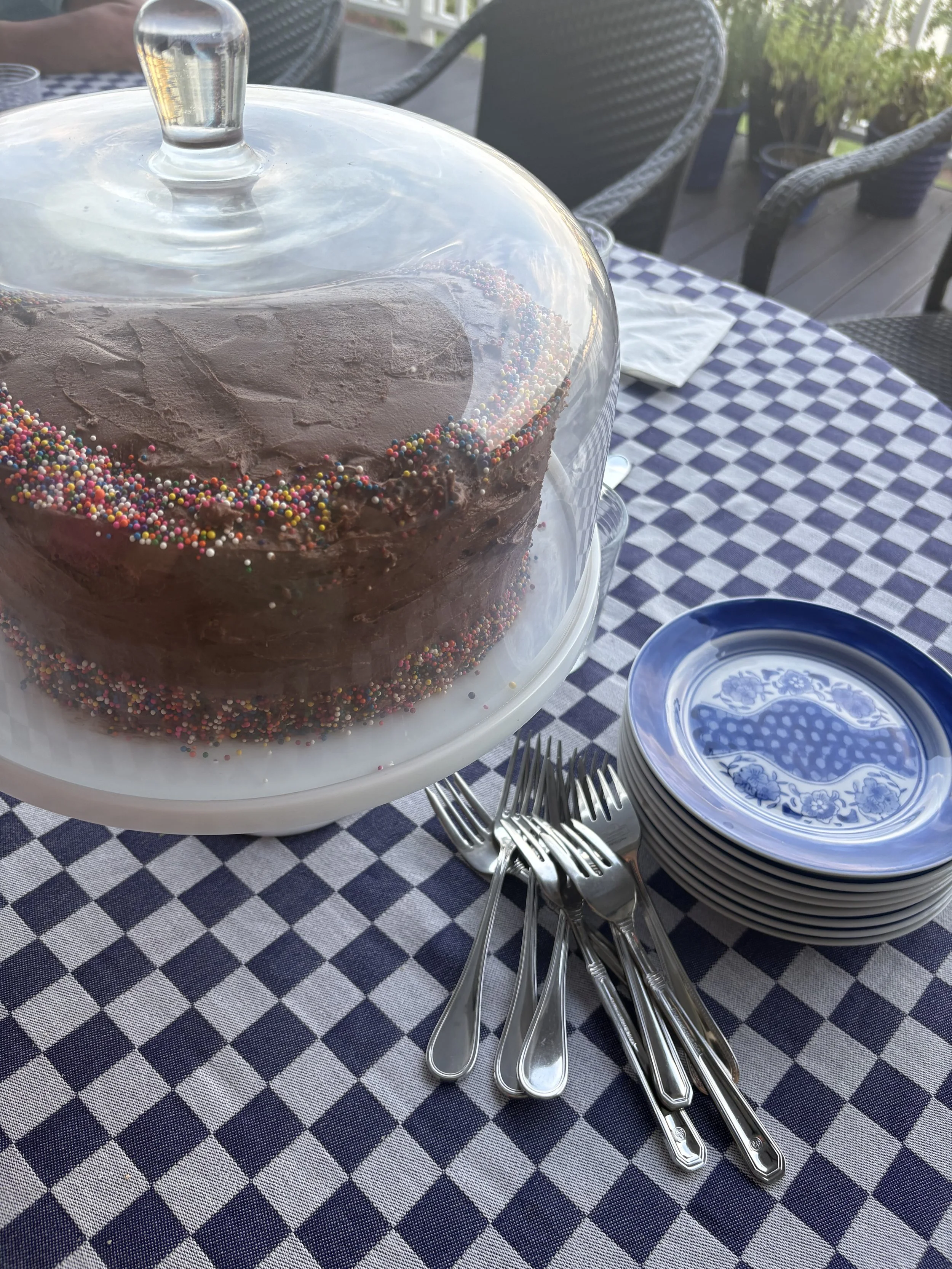
One of my cousins from Holland came for 10 days at the beginning of August and since our other local Dutch friends came for dinner, I had to make the classic cake with fudge frosting from TheCakeBlog.com since it’s one of their favorites. I think I’ve made it at least once every month this summer! I already made it the first week in August because one of my sister’s best friends S came to visit with her mom P and son R. It was the first time R got to decorate a cake! It ended up being a reel on my Instagram because the first time I baked it, the cake did not turn out… I think if it were just me I might have eaten it, the flavor wasn’t bad. But when S told me she had seen all my baking on Instagram and didn’t care what I made, I knew I had to do it properly. Luckily the second time was perfect!
There is already a blog post about it, but I got to read an ARC copy of James Islington’s new book Scion which came out on September 1st. It wasn’t what I was expecting necessarily but I did enjoy it. It was fun to hear my brother I’s perspective when it came out. He always gives me a lot to think about! And it also made me think I liked it more than I originally thought.
Clearly I am stuck on a World War II theme. It’s been that way for almost a year or something. I’m not necessarily mad about it but it is sometimes a bit much! A couple weeks ago I decided to read something else and then both the books I randomly picked up had a WWII theme. Something about the universe has it in for me and WWII books I guess. I read the novel Dear Miss Lake by AJ Pearce. It was historical fiction but still shined a light on what people were doing on the home front to stay positive and work together. Of course it has darker moments due to the topic but there were some great moments of levity and I appreciated reading about those.
I haven’t made it all summer which is honestly kind of a travesty, but I made deep dish raspberry and peach slab pie in. I have the recipe printed out from 10 years ago or so and so I’ll have to look later who the recipe is from. It’s got a delicious crust, which I love because it’s not too sweet, and then is filled with peaches and raspberries and topped off with more crust. The recipe calls for it to cool completely before serving but I actually like it a little warm still with vanilla ice cream. It’s also pretty good the next day after being in the fridge. Even after it’s been in the fridge, if you warm it up in the microwave, it’s still amazing!
I finally finished John Fugelsang’s The Separation Of Church And Hate. I really appreciated all his direct bible quotes and the historical context he put a lot of the issues in. His research is extensive and his humor is fun! My only problem with the book is that it sometimes feels combative, suggesting topics or information that would be “fun” to share with conservative friends, family, etc. I don’t think there’s anything wrong with challenging people, especially when you have as much information as Fugelsang provides. But in a political, social, and cultural climate that is so full of discord already, it kind of bummed me out.
I baked some things to give to other people this month, including my grandma’s favorite lemon tart. It’s a recipe I have adapted because the first time I made it, I didn’t have limes so I substituted it with more lemon juice. And I’ve never gone back! I might have to try it sometime just to see. I also added more sugar to balance out the additional lemon juice. I never considered that limes may be a little sweeter than lemons so I would be curious to see what that tastes like. I also made my family’s famous Whipped Cream Pound Cake for one of my friend’s birthdays. I think it’s one of the weirdest recipes. 6 egg yolks! Turns out 6 egg whites for lunch after that isn’t super exciting. Luckily I had some cheese and bacon to add.
I finished Pierce Brown’s Red Rising and it did not disappoint. I loved listening to the audiobook and once I got used to the narrator’s accent, it felt very authentic. It’s interesting to me how similar it is to The Will Of The Many. I know there are quite a few more and I am forever wondering how I am going to have time to read all the things I want to!
My grandparent’s 60th wedding anniversary was in August and so my mom hosted a big dinner party for them. We had fun going through old pictures to collect and print out and we laughed quite a bit trying to figure out what each of the menu items were based on the drawing we have. For the cake, my mom made a chocolate cake recipe that has been passed down from my grandma’s best friend from elementary school. My sister K and I had so much fun decorating it in buttercream frosting. And K taught me some new frosting techniques! I had never made buttercream roses before. It ended up looking and tasting great.
A couple days ago I finished Kirsten Miller’s The Change and it was phenomenal. I have told everyone I know that likes to read about it. It’s about three women going through menopause and discover they have magical powers. They set out to solve a murder and catch a serial killer. The twist at the end blew my mind. I had to text my mom in all capital letters about it. She also devoured the book earlier in August. There were times when I tried to talk to her while we were in the same area and she wouldn’t respond. When I looked over she had her headphones in and could barely be bothered! The book was recommended to us by my pseudo aunt and author Harper McDavid. She has never steered us wrong! I am looking forward to reading more of Kirsten Miller’s books in the future.
September is looking busy but fun. My mom and I are at my great aunt and uncle’s house to learn how to make jam. I just downloaded Dungeon Crawler Carl which is this month’s virtual book club pick. I started reading Fredrick Backman’s My Friends on the plane yesterday. I am still deciding if I like the voice and so I don’t know yet if I’m going to finish it. My mom, grandma, and I are going to see Jodi Picoult speak about her new book Hollow Bones which I’m about. And a project I have been working on for about a year is coming to fruition… I can’t wait to share with you all!
ARC Review: Scion by James Islington
Sometimes I love an ambiguous ending but in the case of James Islington’s new book Scion, I turned the last page and couldn’t believe it! I even went back to make sure I didn’t miss any pages!
Sometimes I love an ambiguous ending but in the case of James Islington’s new book Scion, I turned the last page and couldn’t believe it! I even went back to make sure I didn’t miss any pages!
I am grateful to Saga Press for providing me with an ARC copy of the book through Netgalley before it comes out on September 1st.
As you may know, I am an enormous fan of James Islington’s Hierarchy Series so I was very curious and also a little apprehensive to read this new one. Scion is a definite departure from the epic fantasy found in the Hierarchy Series. It’s true science fiction, involving AI integrations to daily life, animals created in a lab, the science of identity being defined by DNA, and more. I was almost put off at first because the world building seemed almost minimal but I soon came to realize that it does have depth, it’s just simpler than in his other work!
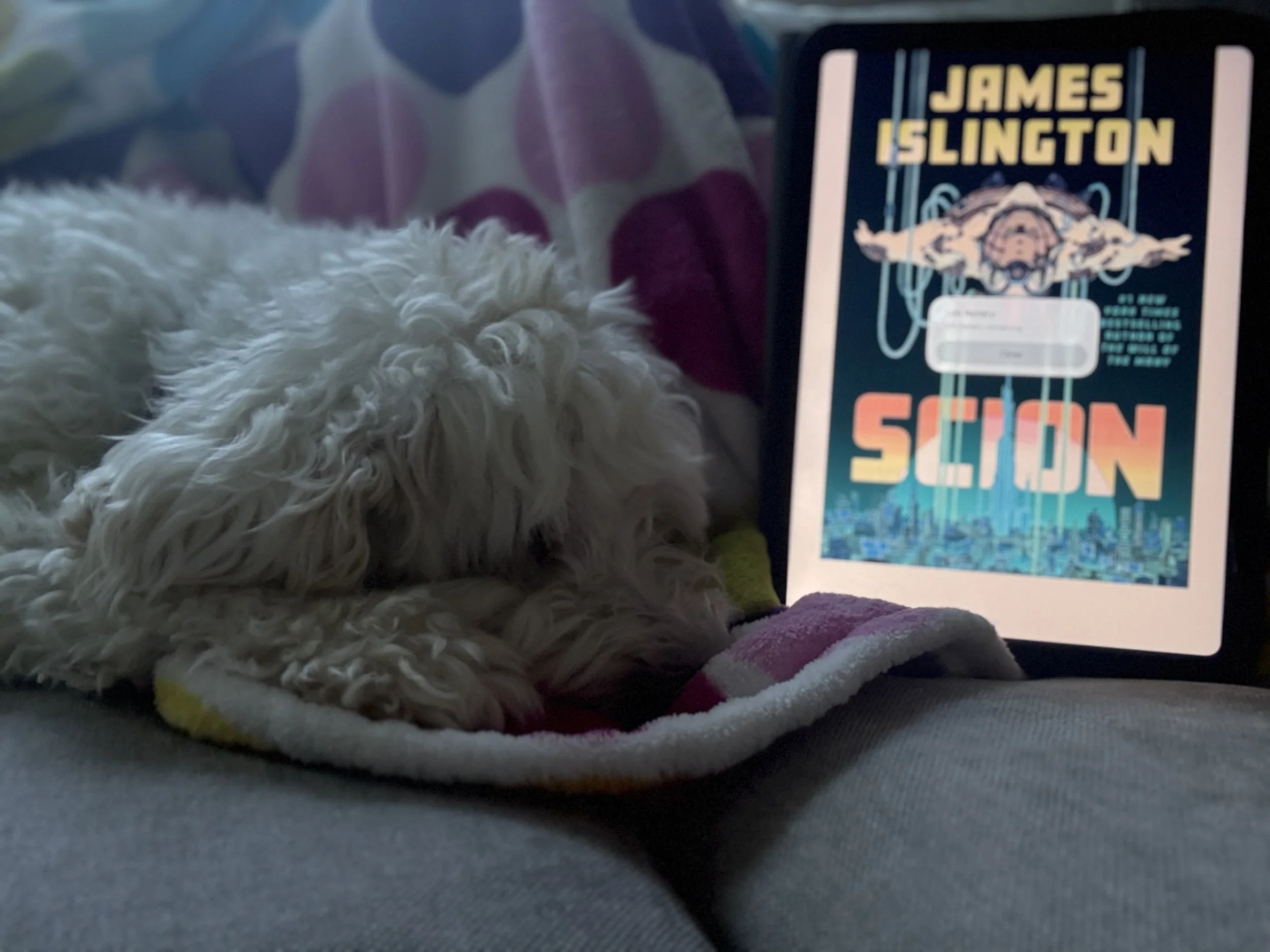
I love the cover - very The Matrix-esque which I think lent itself well to the book. I also found all the screens that appear in the city very interesting. The book has a lot of technology but it wasn’t the screens that stood out to me. The blueish/tealish color also reminds me of technology.
I was just explaining to someone today about how to burn a CD (I know, she’s just a baby!) but it made me think of how far we have come and this book certainly made me consider where we are going. I am both intrigued and absolutely terrified by the integration of technology, perhaps into our very being in the form of sentient bionic parts, etc. It was fascinating to me that this book starts out with the topic of “Lifers”, who have chosen to take an elixir that will prolong their lives and yet the book doesn’t follow up a lot on that science. Instead, we are taken into a mystery of identity, intelligence, and self discovery.
Azure as a main character was super fun to read. Those of you who have read the Hierarchy Series will be reminded of Vis and his persistence. And also some of his sass! He’s an interesting character, because so much of his identity up to this point has relied on his technology. When he is hired by Old Woman (later named in the book), his AI is taken away from him and it pushes him as a character and I thought it was really interesting to see that growth and development. I can’t say much else because there are a lot of identity factors that come into play! Azure made me laugh, made me a little sad, and impressed the heck out of me. His hard work and commitment in the face of adversity was foundational to this story and I think he was a great central character.
The Old Woman turns out to be a character that is of equal importance, as she is the woman who Azure has been hired to protect. Usually an assassin, Azure is reticent to protect another person since his last job protecting someone ended in tragedy. She kind of reminded me of my sassy grandmother! She knows what she wants, she does what she wants, and she doesn’t hold back. She even holds information above Azure’s head in order to manipulate him. This is a good tactic but we also never get all of that information and that was disappointing.
As I said, I was a little apprehensive about reading this book after loving the Hierarchy Series so much. And I did really enjoy it but I was also missing some of the detail that the Hierarchy Series has. There are a lot of fascinating concepts in this book such as lifers, robots, the question of what it means to be an individual, coding, DNA manipulation, lab grown beings, protection radars, and so much more. I wanted to know more! I don’t think we needed all the information necessarily but it would have made the story well rounded. The end was certainly eventful but I also found it somewhat unsatisfying. I didn’t find the closure I wanted, especially in regards to the information that Old Woman has, and how it shaped Azure as a character. The question of how one lives in regards to peace at the end was certainly thought provoking. But I would have been more at peace if I had more information!
Reading the book was certainly fun and I was impressed by how creative and different Scion was from Islington’s other work. Honestly, I think I would probably have liked it more if I hadn’t read some of his other work. It was a positive experience but I still have reservations about it. I’m already thinking about re-reading it. And I’m also really curious for my brother to read it. He has more experience with science fiction than me and he’s also been really fun to talk to about Islington’s other books.
July Cupcakes And Characters
July was a slower reading month due to a fun trip to Colorado but the books I did read hit hard!
I’m convinced that Tom Hanks could double his net worth by starting to voice meditations. His voice is so melodious and soothing!
July was a slower reading month due to a fun trip to Colorado but the books I did read hit hard!
I’m convinced that Tom Hanks could double his net worth by starting to voice meditations. His voice is so melodious and soothing! I listened to Ann Patchett's The Dutch House, which Tom Hanks reads. His performance of this book was absolutely amazing and now I can’t imagine what it would be like if I had read it instead of listening to it. As someone who is close with my siblings, I really enjoyed reading this book and the interplay between the two characters and what it looked like for them to be siblings. I definitely related to the protectiveness that Maeve has for Danny and it cracked me up to hear him complain about it while also seeking it out. I firmly believe that certain places stay with us forever. My family has its own version of a dutch house like that! Not quite as fancy as this one though. A place like The Dutch House played such a big role in Danny and Maeve’s life and it was interesting to see all the different iterations of that role. I definitely don’t think my half-siblings will be excited if I show up at their house like Danny and Maeve did to their step-sisters! Everyone has things they struggle with, it turns out, and some of those things are easier to process than others. The concept of the book as smart people who struggle to overcome parts of their past really resonated with me. And made me realize I better keep working on myself!
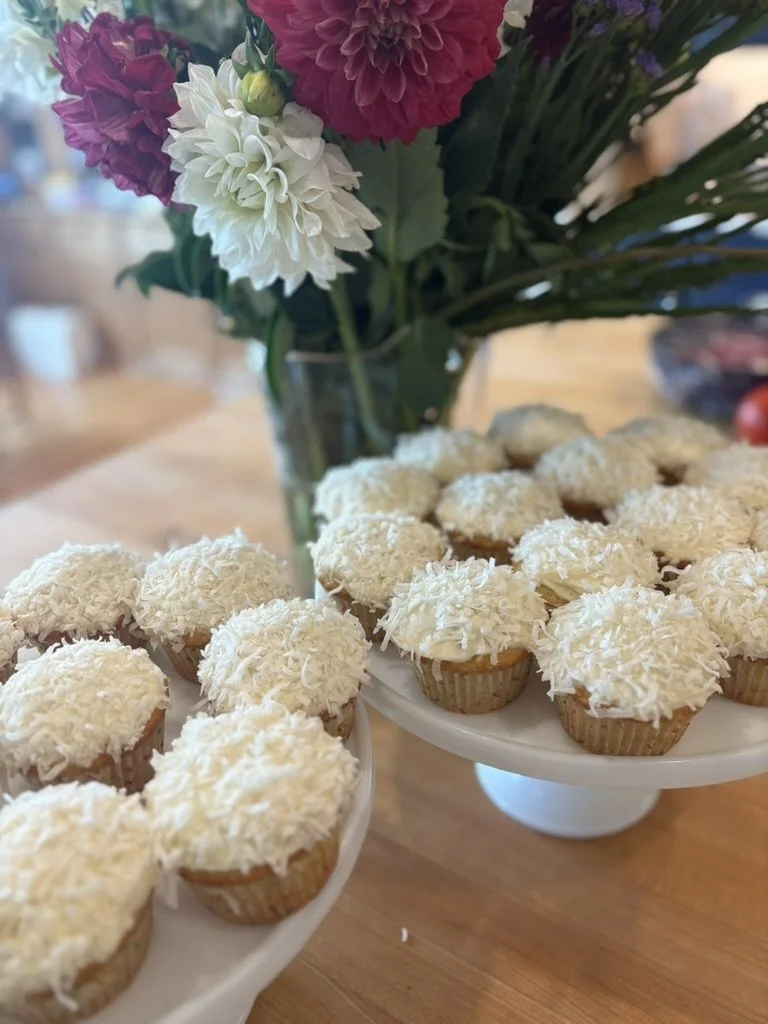
Guess what?! I made the coconut cupcakes again! One of our best family friends, N, came to visit and we have been spending time together in the kitchen for the last 20 years so every time we get together we end up cooking or baking something fun. He has always loved coconut so I couldn’t resist making them. They definitely looked a little better this time, N is pretty meticulous and we discussed the coconut coverage on top rather seriously!
I’m late to the party on this one but I really enjoyed reading Pam Jenoff’s Last Twilight In Paris. It might be obvious at this point but I love hearing about different perspectives, especially on topics or times where people have such vastly different experiences. Last Twilight In Paris was definitely one of those. We know, collectively, about what horrible and diabolical suffering took place during WWII. But I think it might also be true that we underestimate the challenges and suffering of people who didn’t have the suffering we think of first (ie. concentration camps). Louise and her husband working together to solve a mystery was a beautiful way to have them share their WWII experiences and help them heal together. It’s hard to imagine the hard choices that people made, including Red Cross workers who tried to do as much as possible while still maintaining their positive status with the Germans. And people who were also willing to risk everything, their life, the lives of their loved ones, and more, to help. Whether that was sneaking in a camera as a singer, or sneaking out of a department store turned concentration camp, there were always risks and the consequences could be dire. I thought this book was well done and I’ll definitely keep it in mind to recommend to people.
I tried a new recipe this month for strawberry shortcake with lemon in the cakes. It was pretty good! I think this sort of scone type can be very hard to make. And it’s been so humid here in North Carolina that they got soft kind of quickly. It doesn’t help that I forgot to put the heavy cream and sugar on top of them before they went in the oven! Strawberries and lemon is one of my favorite flavor combos so I was excited to try this recipe. I’m still trying to decide if I am going to try it again or not.
I have been lucky recently with the opportunity to do some ARC reading for books that are coming out in the next couple of months. In July I read Jane D Cairns’ Exalted Objects, which is historical fiction about the railroad tycoon George Stark. The book begins in 1896 when George has to decide whether or not to commit his eccentric brother Will to an asylum, at the risk of his brother or at the risk of the family reputation. The book starts out strong and I was very intrigued to see where it was going. Medicine, particularly mental health care, was mostly guess work at this point and historically was actually quite barbaric and harmful. In the beginning, I could really feel George’s concern and anxiety about how to help his brother. The book then flashes back to the years before this moment, with his Will’s graduation (or expulsion) from boarding school and all the ensuing events. Unfortunately, I think the pacing was a real challenge and I didn’t end up finishing the book. I struggled to stay interested and although the book is written in first person, I think the prose often felt stilted and formal. Like I said, I find the concept very interesting and the beginning definitely hooked me but I was bummed that it didn’t hold me on until the end. The one thing I did really enjoy about this book was the vocabulary! I learned several new words, including “sybarite”, which is a great word and also is just fun to say. I have read a lot so when I come across an author who challenges my vocabulary, I am often impressed. I am grateful to HTF Publishing who gave me the chance to read this advanced copy through NetGalley.
Other bakes included bread (I tried a new whole grain recipe), homemade rice krispy squares, and probably a few other things I forgot about!
There are some books I even forgot about! I have been enjoying tracking my reading and sharing with others on the Story Graph app but sometimes I just lose track… I started listening to Red Rising but I didn’t finish it on time so I had to return it to the library. 11 more weeks on the wait list! Grrrr. I’m also working through John Fugelsang’s The Separation Of Church And State which is intense but a fascinating look at how Christianity in the US has become corrupt. I love how much direct reference he has to The Bible and how he explains things. Oh and I’m also slowly reading through Kate Bowler’s new book Joyful, Anyway. I’m trying to take my time because I love it so much and don’t want it to be over!
June Books And Bakes
Better late than never - here are the June Books and Bakes!
Better late than never - here are the June Books and Bakes!
I started off June by finishing Beatriz Williams’ Schuyler Sisters series. I learned about Beatriz Williams from one of my pseudo aunts, who is also one of my favorite authors, Harper McDavid. Her book Zapata shines a light on a lot of the craziness that goes down in the oil industry, particularly on the Texas/Mexico border. Anyhow, Williams has now become one of my favorite authors and I have been trying to pace myself so I don’t binge all her books at once. The woman who narrates some of her audiobooks, Kathleen McInerney is amazing. I always enjoy listening to her and Williams’ writing is excellent. I appreciate how creative Williams is with her dual narratives. One of the Schuyler Sister books dual narratives is actually the same character, just in two different periods of her life which I found super interesting.
I have never been a coconut fan (except in a piña colada!) but one of my sisters introduced me to Ina Garten’s recipe for coconut cupcakes and I love them. Here’s the recipe - https://barefootcontessa.com/recipes/coconut-cupcakes. The coconut is subtle but the flakes that are included in the cupcakes themselves give them a great texture. And as far as I am concerned, you can never go wrong with cream cheese frosting. A hot tip for anyone who tries this recipe is that the frosting recipe makes WAY too much frosting for 24 cupcakes. I halved the recipe the second time I made them and I still had extra! The recipe also says it makes 18-20 cupcakes. Every time I have made them, it makes a full 24 and the cupcakes are not small.
I paused reading The Only Plane In The Sky in May because I had to return it to the library but I got to finish it in June when I got off the hold list again. It’s an oral history of September 11, 2001 so it’s only available as an audiobook. The author Garret M. Graff has collected the stories of a multitude of people and how they experienced 9/11. It includes firefighters who responded to the crash and went to rescue people at the twin towers as well as the crash site in Pennsylvania, air traffic controllers who were desperately trying to figure out what happened and what they could still prevent, family members of people who were missing and/or killed, government officials trying to make sense of it all and respond at the same time, as well as some of the people on Air Force One who were tasked with protecting President George W. Bush. It was certainly sad to listen to but I also appreciated hearing everyone’s perspectives, emotions, crisis management, fears, and hopes of what they could still do. I was one month away from being seven when 9/11 occurred but it’s a day that’s burned into my memory. I’ll never forget sitting on this little red chair in our family room watching the towers fall on tv. I often find that when talking about 9/11, people are interested in sharing their own experience of that day and how it affected them. It’s not a book for the faint of heart but if you like history and are interested in how people experienced and were shaped by that day, this is definitely a good listen. It also occurred to me while listening that this year is going to be the 25th anniversary of the attacks of 9/11. That sort of blew my mind and I am interested to see what, if anything, takes place in remembrance.
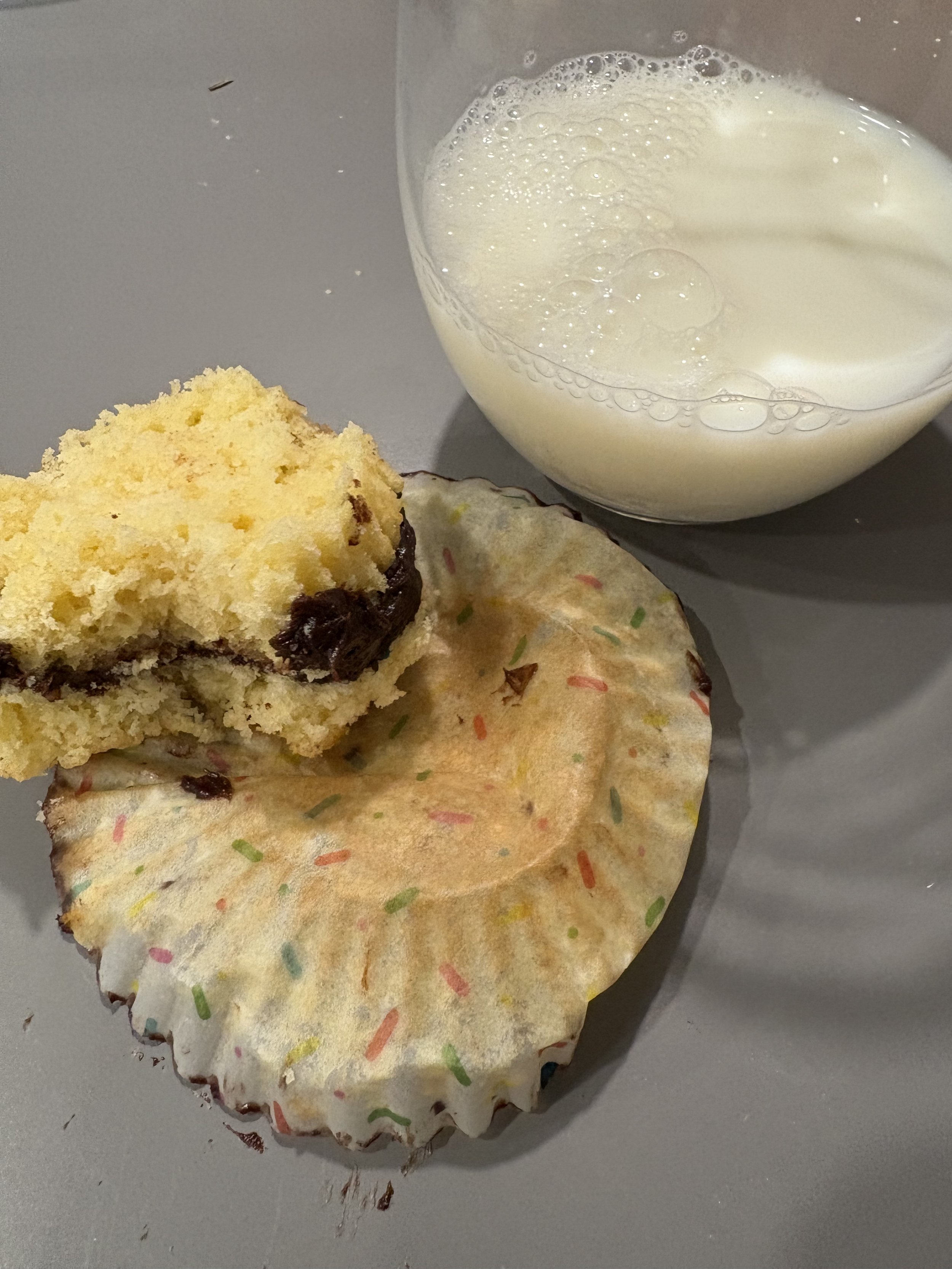
I made the same Yellow Cake with Fudge Frosting from TheCakeBlog.com that I made in May but this time in cupcake form. It’s one of my new go-to recipes and it’s always good! It also freezes really well so I’ll freeze either slices or cupcakes and just pull some out when I need a sweet treat. I am also kind of a child and still love milk. I love to pair it with chocolate and a cold glass of milk goes perfectly with these cupcakes.
I have never read Remarkably Bright Creatures which I read for a new book club that I joined at my favorite local indie bookstore. The book club reads books that have been turned into movies so it’s right up my alley! I really enjoyed the book and thought the movie was fine. Sally Fields knocked it out of the park but I still didn’t really enjoy the movie. I think a lot of that had to do with pacing and most people in the book club felt the same way.
A classic apple tart is popular in my family, especially a traditional European one that isn’t super sweet. We had some extra granny smith apples and so we made it on a whim for dessert one night. It was fun to sit down with my mom and sister to peel the apples and just chat. Sometimes tart isn’t always the best left over but I took some to work the next day and utilized some of the Starbucks whipped cream and had a great snack out of it on my lunch break!
Our virtual book club book for June was Yesteryear by Caro Claire Burke and it’s going to require its own blog post. There is just so much to say and unpack! And as you can imagine, everyone in the book club had major thoughts and opinions. Check back on the blog soon to read my review and learn about the mistake I found in the audiobook. 😳
I posted it on Instagram but this month my mom ran out of flour and sugar! What a travesty. When I came home from Costco with three big bags of each she laughed at me but I told her it could never happen again!
I did already finish some books in July but you’ll have to check back in a couple of weeks to see what I read and what I concocted in the kitchen!
Book Review: The Strength Of The Few by James Islington
This book came out last November, I reread it for book club in January, and it has taken me this long to write and publish my review! Part of it was the craziness of the holiday season and the start of the year but I also really had to sit with this book and think about it.
In a surprising move for me, I did not start the book the day it came out. I didn’t need any more anticipation, that’s for sure. I just didn’t want to start it because then it would also be over. My brother read it ahead of me and it was fun to hear just the overview of how he was feeling. It also made me laugh because I am usually the one asking the questions: Have you started it? Where are you? Have you gotten to this part yet? Can I tell you a random mild spoiler? I have rarely had the tables turned on me like that! I actually enjoyed it more than I thought it would. My brother is very discerning and reads in a more analytic way than I do so I really value his opinion.
I’m excited to share my review of The Strength Of The Few with you and I hope it encourages you to read it! Fair warning that the series isn’t complete yet.
So, here’s the deal. This first section is a spoiler-free review (although there are The Will Of The Many spoilers) and then you can stop scrolling if you want when I get even more passionate about it and have to include spoilers.
Spoiler Free Review:
I stand by my statement that the first book in this series, The Will Of The Many, is one of the best books I have ever read. Because of this, I had big expectations about this book but was also nervous about it. The end of The Will Of The Many changes the dynamic a lot with the introduction of three different worlds. I was apprehensive about how Islington could pull this off.
I do think Islington pulled it off but there were definitely some rough parts. Obiteum, Luceum, and Res, are all distinct and so there was no doubt that they were different worlds. Much like The Will Of The Many though, you are thrown right into it from the very beginning. The only indication that the chapter takes place in one of the worlds is a symbol at the beginning of the chapter. My sister-in-law listened to it and she said it was hard to grasp at first.
As I said, the worlds are certainly different and I really enjoyed seeing how Vis finds a version of himself in each of them. Due to his becoming synchronous, the beginning of all three worlds are abrupt and dramatic. There is quite a bit of exposition in Obiteum and almost none in Luceum. Since we spent all of the first book in Res, as readers we understand it better but so much has changed.
Part 1 is made up of exposition, complete confusion, and the discovery of what all these worlds mean. I felt like the main purpose was really to have readers understand the dynamic of the three worlds and introduce new characters. I will say that all the new characters were pretty overwhelming. As the book continued, none of the characters were so tangential or lacked value that they could obviously be left out, but it still presented a big challenge.
Part 2 is a lot of set up for Part 3 and so there were some parts that I thought were too drawn out. I did really enjoy this section though because we did learn more about how Will functions in each world and how that will change Vis’ actions going forward. We also got quite a few answers about Res and why a lot of these things are happening.
Much like The Will Of The Many, Part 3 is an explosion of action, information, angst, and set up for the next book. For the most part, I think it moved the stories forward in all three worlds well and it did more than just set a base for the next book. Still, there were things I don’t think were necessary and some happened so fast that it felt contrite. It was also so overwhelming that I didn’t process or understand a lot of things until I reread it.
Overall, I really enjoyed this book. There are some things that I think were over the top, some actions and deaths that felt unnecessary. I’m most frustrated that the end was so eventful and therefore rather confusing. The only other structural thing that bothers me is that the time we spend in each world is rather brief before we move on to the next one. I think I would like it better if we spent more time in each world at the same time. I saw someone online recently that said they were going to reread it and organize it so they read the whole story of each world at one time. So that might be next on my list!
STOP HERE - If you don’t want spoilers, don’t keep reading!
You’ve been warned.
I don’t even know where to begin. I have so many mixed feelings about this book. It was overall a good book and I’m still very impressed with Islington’s writing. But this book felt like a frickin’ rollercoaster. Right away I can think of things that I loved: seeing Luceum’s Vis (aka Deaglan or Leafhear) and how he finds some peace with Grainne and her family, meeting Caeror, Vis telling Edihin who he really is, how Diago the alupi is so loyal to Vis. There were also things that blew be away, some good and some bad: Vis’ ingenuity in creating the imbued blacks stones that he can manipulate into almost anything, Vis leaving Relucia in a sapper, the revelation that during the Iudicium, Calidus told the Anguis that he was Vis in order to protect his friend. This last one was gut wrenching!
So, here’s what I liked:
Meeting Caeror. I loved how he apologizes to Vis on behalf of Ulciscor threatening Vis with a sapper. His joy when he finds Vis is so emotional as a reader because we’re in such shock but Caeror is also so happy. Although he serves a big expositional function, Caeror also challenges Vis as a person and character. He encourages him to learn what he needs to know but also makes him see that it might not be easy, comfortable, and even sometimes humane. I was also impressed by his self awareness and self preservation that he did not want to hear everything about Res.
Vis, as Deaglan, finding some peace in Luceum. It didn't last long but I liked getting a glimpse of Vis at peace, finding purpose in good honest work, and feeling as though he did not have to hide who he was. He hasn’t been able to let his guard down or be himself since he escaped Suus and so we got to see a different side of him.
The character of Callidus’ father, Magnus Tertius Ericius. He is rightfully suspicious that Vis chooses to work with him but he is also very receptive and easily comes to understand what Vis’ goals are. He also pushes Vis to be more practical about the challenges he will face and forces him to see some hard truths. Ericius also clearly really loves his son and has great respect for him. He is able to admit his regret over choices that he made that alienated his son.
Learning more about Will. We learn a lot more about how Will works, especially in the world of Res. I found the placement tests determining people’s use and control over Will fascinating and also I agree with Vis when he says that running the Labyrinth really prepared him for this. In Luceum, we still have almost no idea about how Will works except that it seems to only be for a select few. In Obiteum we learn some of the harsh ways to use Will but they do serve a purpose.
The connection that the academy’s graduates make. While Iro remains harsh and separates himself. (Also, his death. What the heck?!) Even Indol seeks community with the other graduates and I enjoyed how Vis, Emissa, Aequa, Eidhin and a few others realize that they are Stronger Together (sorry, I had to) and seek to collaborate in order to solve problems and with the goal of making things better.
Eidhin is so true to himself and is often the one who offers the best wisdom. He keeps Vis honest, even when it means saying something Vis might not agree with or want to hear. I love him as a character.
Here’s what I didn’t like:
Aequa’s death. What the heck was that?! It was very unexpected, horrendously violent, and seemed unnecessary. Also it happens in the span of two pages, in the middle of a series of other huge events, and so I could barely process it. I had to go back and read it again because I almost didn’t understand/realize what was happening. I really don’t feel like this death has a purpose. Vis is already well aware of how alone he can be in the world and there’s no doubt that he knows he cannot always protect the people he cares about. I was also really bummed because it’s one of the relationships that Vis really maintains from The Will Of The Many and Vis is already so alone. He and Aequa went through so much trauma together at the Naumachia and then also at The Academy. I don’t understand or like this death at all.
I said earlier that many of them complemented the story but there were so many new characters. I couldn’t always keep track and I didn’t always understand who they were and why they were important. This was mostly true in Luceum where Vis goes through a rollercoaster of events, emotions, and situations. Ruarc, Cian, King Ronan, Gallchobhar, Lir. Some of them go by multiple names so that certainly didn’t help.
Vis’ father dies again!! I was blown away when we met Vis’ dad because it was really beautiful but also kind of random. I think it gives Vis good closure and a renewed sense of self and confidence. And yet, I’m confused about why it was necessary. It gives the reader important information about the connection between the worlds but it also brings up a ton of questions. Why would the Hierarchy keep him alive? And how does it work really? And what purpose does it serve? I have tons of questions about him coming back and how he functions but mostly what I didn’t like is that Vis loses his father again! Vis needs to move on from his grief but we also didn’t need another gutwrenching death/goodbye! Also - a total jerk move to give Vis his father back and then take him away again. “Jerk” is the nicest word I could think of for this!
How easy it is for Obiteum Vis (aka Siamun) to kill Ka. I really think it couldn’t be that easy but we have no inkling at all about that. And it just seems way too tidy, especially after all the other crap that has gone down in Obiteum. I assume that’s not really the case but it felt pretty anticlimactic.
Things I have questions about (besides just everything):
How the heck is Ruarc (from Luceum) also Caeror? Yet another thing that happens so abruptly that I almost didn't notice. For almost the whole book it appears that Ruarc has it out for Vis and now he wants to give Vis all this information and tell him that his counterpart in a different world made a mistake. Up until this point it’s very unclear how the worlds interact and how that works. I couldn’t wrap my head around it. It was made clear that Caeror is no longer synchronous so I don’t understand how he is also in the world of Luceum.
The whole power structure system in Obiteum and how the children as creepy water filters fit into it all. That was just horrific and while Netiqret sort of explains that it is because children are more powerful and malleable, it’s still confusing.
What are the interactions between the worlds and how does that work? We see Vis and Ostius move from Res to Luceum and back but it’s not clear how one affects the other except that the geographic layout is the same. We had a lengthy discussion at book club about whether or not we thought all three worlds were functioning at the same time. My brother said that maybe Luceum is the old world, Res is the current world, and Obiteum is the future world. It gives the statement "Obiteum is lost” some interesting implications! We decided it could really go either way but for sure something to ruminate on.
The whole raising of the dead situation in Res at the end. It sounds like either Religion or Military has just been collecting all these bodies to experiment on in case they figured out this pre-cataclysm power. So creepy. And also just weird. It was pretty obvious to me, and the rest of book club, who the character is who speaks the last line of the book is. Which is kind of cool but also after the dad - I don’t need or want another terrible goodbye. Because it’s not like this person can truly come back to life. So I’m curious but also apprehensive. Is Res Vis going to end up being the bad guy?
I didn’t catch this until the second time I read it, but when Vis encounters the man who he has been hiding from who is trying to find and kill Vis (we never get his name), the man reveals that Vis is now the only one who can do anything about the three worlds. He tells Vis that as of a few hours ago, Vis is the only man alive who can serve the purpose he needs to. That means there was someone else who could have! So someone else was synchronous and was able to hide it but maybe also unable to do what was needed. I need to know who it was and how this is possible.
And who the heck is this dude?. He is very powerful and dangerous but what role does he play? We discussed in book club whether or not this was the Res version of Ka but that seems a little too simple.
I like this book, I’m frustrated with this book, I have a million questions, and I’m desperate for the next one. Much like the end of WotM, I’m nervous about how Islington can bring this together going forward and if he can pull it off. Only time, and The Justice Of One (book 3, expected late 2027), will tell!
One more thing - I always thought this was going to be a trilogy and then James announced it would be a quartet. And the nerd and type-A person in me is very upset about it! The theme of 3 in these books is absolutely insane. And 3 books would be the icing on the cake! And make sense in my opinion. I’m also very curious since the book titles seem to really set up for 3 books - The Will Of The Many, The Strength Of The Few, The Justice Of One. What is book four going to be called?!? The Existence Of No One?
Last thing - rude of the publisher to redesign the cover so it didn’t match the first! They did correct it with a reversible dust jacket but I didn’t think the quality was great. And some of them said “heirarchy” instead of “hierarchy!” Honestly, that just made me laugh. Think about how many people looked at it before it got finalized!
May Reads And Recipes
May was actually a slow reading month for me! It was a month full of fun events - my sister in law got her interior design degree, my mom got a puppy, one of my childhood friends got married, and I finished coaching my first season of Girls On The Run!
May was actually a slow reading month for me! It was a month full of fun events - my sister in law got her interior design degree, my mom got a puppy, one of my childhood friends got married, and I finished coaching my first season of Girls On The Run!
Even in all the craziness I did get some good reading in. Our book club book for this month was Daisy Goodwin’s Diva. I enjoyed it as historical fiction and I had never heard the story of the opera singer Maria Callas. I listened to the audiobook and one of the things that I loved the most was that it had recordings of her actually singing in some of the chapter breaks. I didn’t love the book overall though and I think maybe it is because the story had so few high points. I knew it was a sad story before I started listening to it but there were very few moments of levity. Even in some of the saddest books I have read, there were still moments of relief from the dark topics. Regardless, I loved hearing a story about a famous woman in history who often gets overshadowed by another woman’s story.
I sometimes have a tendency to resist jumping on the bandwagon of what’s popular at the time but I couldn’t resist binge-watching Amazon Prime’s Off Campus series. I read the books by Elle Kennedy for the first time a couple of years ago and I was excited and apprehensive as to how it would turn out! I think they crushed it. I have seen some really funny and relevant articles about how millennial women are obsessed. Since the show came out I naturally had to reread a couple of the books and The Score was one of them. Dean and Allie are two of my favorite characters so I love how they started to set up that relationship. I am also completely in love with Khobe Clarke’s portrayal of Beau Maxwell….. If you know, you know, and I can’t say anything else.
I reread Frank Herbert’s Dune for a super fun project I’m doing with a friend (stay tuned!) and that was super interesting. Most of my friends read it in middle or high school but I didn’t read it for the first time until I was in my master’s program. It was as weird as I remember! I am not always a huge fan of science fiction and it definitely takes some getting used to. Overall I thought it was a fun read. I often notice new things when I reread a book, whether it’s for the second, the ninth, or the umpteenth time. This really stood out to me about Dune. There is so much detail, some of which gave me a lot of questions! I haven’t read the other books in the series so I’m excited to explore some of those in the future.
I haven’t finished it yet but I’m in the middle of Merijn van de Laar’s How To Sleep Like A Caveman. I have a tendency to nerd out hard about certain non-fiction books and this one is no different. Archaeologists have found evidence that cavemen slept on beds of leaves that we now know repel bugs. That is so crazy and so cool! There is also information about how modern technology has an impact on our sleep. Van de Laar writes that you’re better off having a tv in your room than scrolling on your phone. And one of the worst things you can do is have a clock in your bedroom. My grandma was not excited or pleased to hear this fact! Van de Laar examines a lot of studies and it’s fascinating how much contradictory information and results have come from studying sleep. Part of it is just that there are so many different factors that can have an impact.
Hopefully I can give you a good recap of June when July hits. The reading has been off to a good start with continuing How To Sleep Like A Caveman and finishing Beatriz Williams’ Along The Infinite Sea.
The May recipes were so good! I made The Cake Blog’s Classic Yellow Cake With Fudge Frosting (https://thecakeblog.com/category/cakes/page/3) which is always a big hit. One of our family friends says it’s the best cake in the whole world! I busted out some of my classic chocolate chip cookies to donate to a local women's shelter. And I made the Duncan Hines Butter Golden cake mix into cupcakes for one of my friend’s last days at Starbucks. Let me just tell you, there is nothing wrong with a box cake mix and this one hits the spot every time. My not so secret trick is that I use eight tablespoons of butter instead of seven. The sticks of butter I use are eight tablespoons and I’m not going to have just one tablespoon left over!
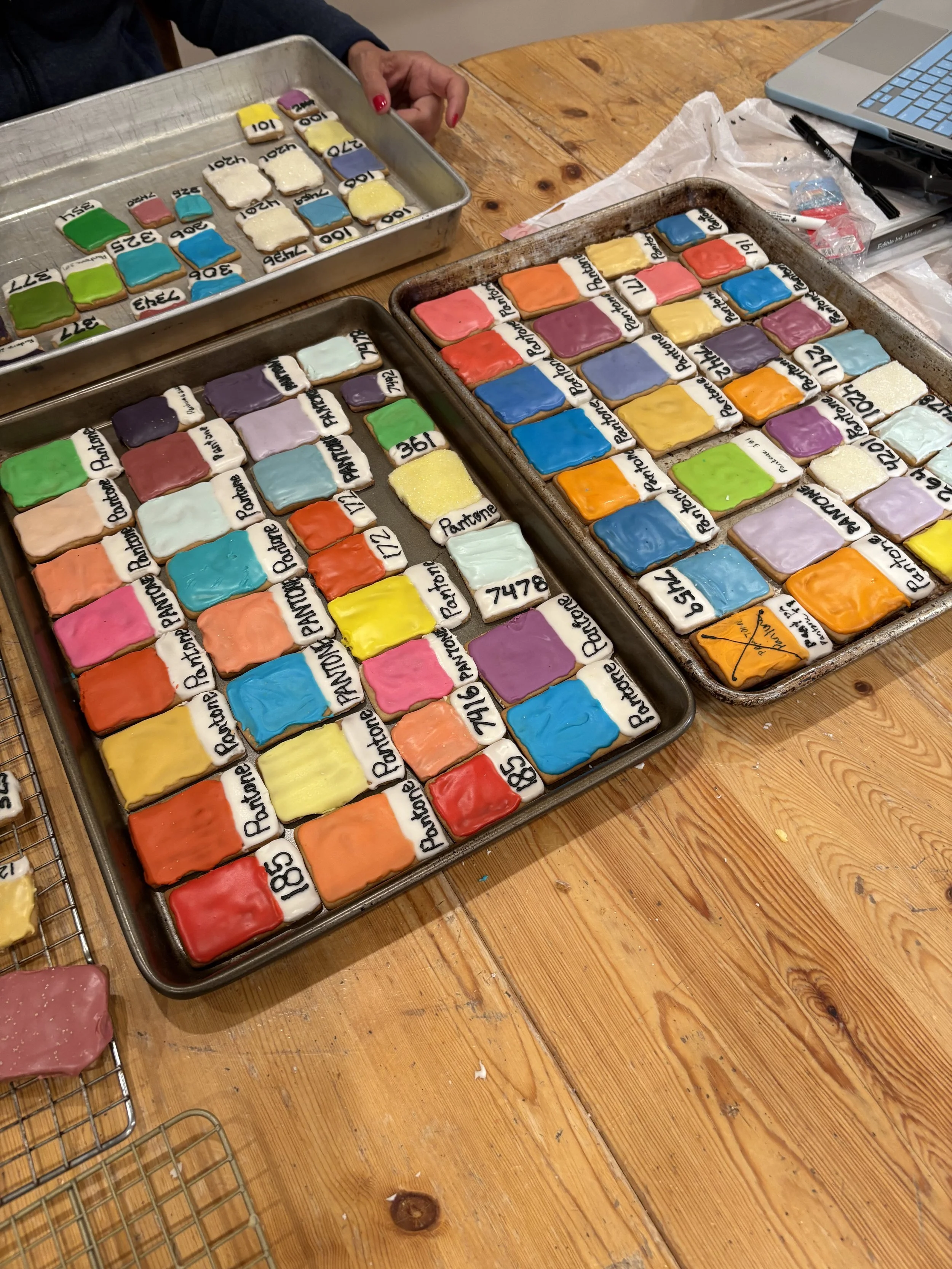
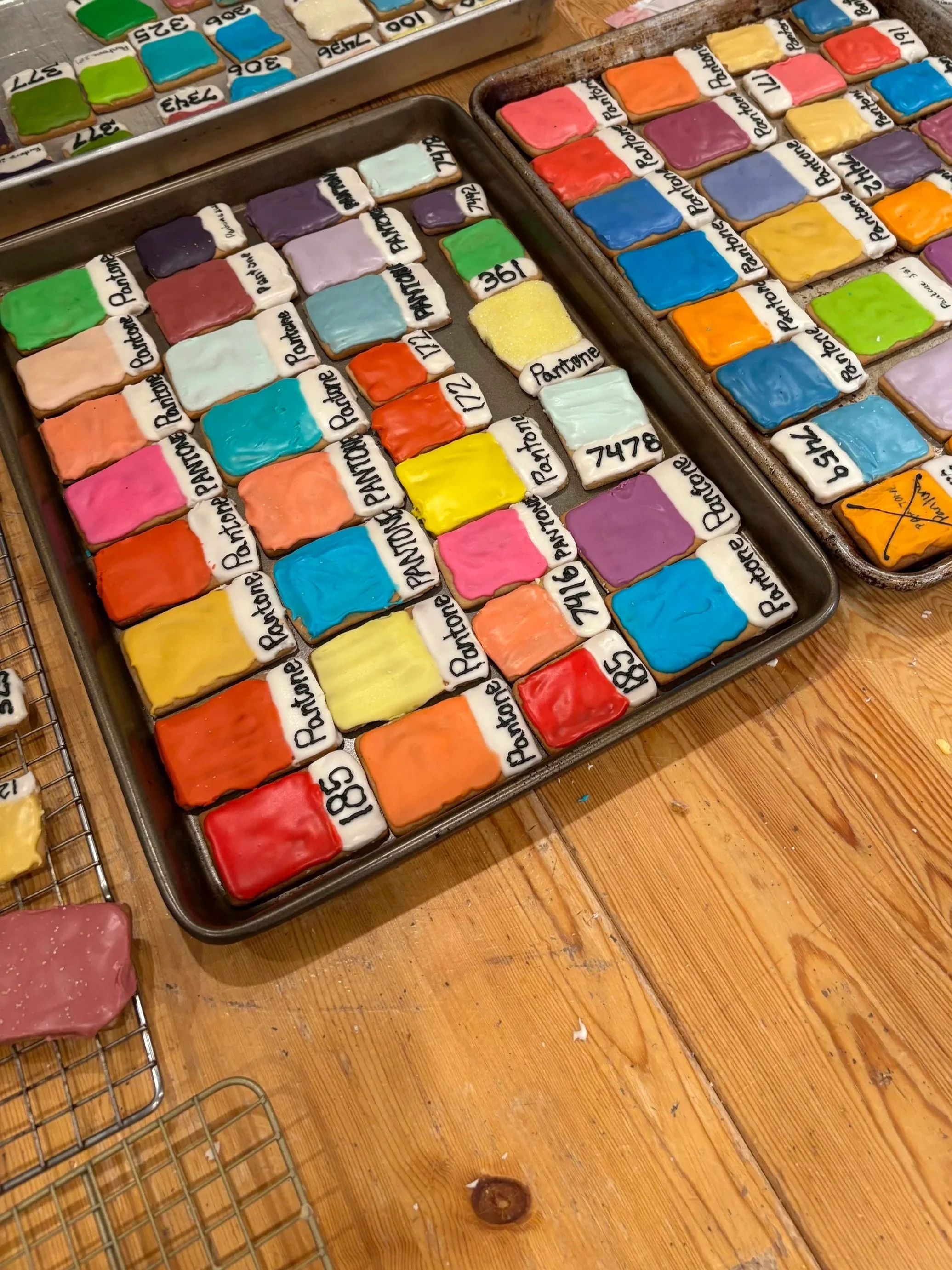
I almost forgot the Pantone cookies! As I said, my sister in law graduated with her degree in interior design and my mom, sister, and I made cookies decorated like the Pantone color swatches. Check them out below! We made our family’s classic sugar cookie recipe that we’ve used for as long as I can remember. We brought the cookies all the way from North Carolina to Colorado! Thank goodness they’re better the next day when the frosting has soaked into the cookies a little bit!
ARC Review: Whisper And Spies by Sheridan Jeane
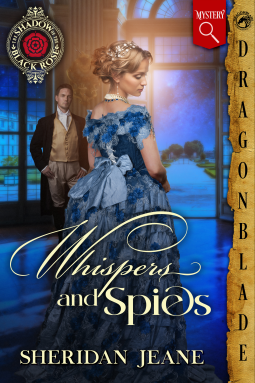
The beginning of Sheridan Jeane’s Shadow Of The Black Rose series starts not with a bang but with intrigue, a woman trying to find her place in good society, and possible treason around every corner.
The beginning of Sheridan Jeane’s Shadow Of The Black Rose series starts not with a bang but with intrigue, a woman trying to find her place in good society, and possible treason around every corner.
The female main character Helena is endearing, witty, and surprisingly sure of herself in almost every way that matters. In matters of the heart, however, she doesn’t see herself clearly and doesn’t allow herself to be truly seen by others.
She is drawn into a fake engagement with the quiet, brooding male main character James. James, a wounded war hero, is struggling to find purpose without the military and seeking safety after being betrayed by one of his own men.
James and Helena are tasked with faking an engagement in order to infiltrate a secret society that the government knows is plotting treason.
What follows is a fun flurry of dinner parties, rendezvous in secret places, mild bodily harm, and the constant risk of being discovered. When things do end up exploding, James and Helena have found love in one another and a new purpose in life as a team.
The whispers and spies the title calls out are extensive, enthusiastic, and entertaining. The novel is a fun and flirty tale that is sure to entertain. James and Helena’s relationship starts with a spark but seems to flicker for quite some time. I think much of their relationship is forged under pressure and the threat of danger but they do seem to find true love with one another in the end. Parts of the book are a bit of a reach. A young woman of good breeding knowing how to defuse a bomb is fun but the brief interlude about her father teaching her how to fiddle with codes and clocks doesn’t totally explain it. There is an extensive cast of characters that I sometimes struggled to follow. Although Aunt Prudence might now be my new favorite meddling aunt character. Her presence and dialogue made me laugh every time.
Despite some issues along the way - the chapter headings weren’t consistent, the plot sometimes wavered, and the romance development wasn’t always strong - Whispers And Spies was an enjoyable read that I would recommend to anyone who enjoys a dash of danger with their historical romance.
Many thanks to Dragonblade Publishing for providing me with an advanced reader copy to review.

Censorship Is Here
We are on the precipice of an absolutely devastating and destructive time in terms of censorship.
Banned books are always an issue and I wrote a blog post about this in October of last year for Banned Books Week but I’ve been motivated recently to delve into this topic more and share why I think it is such a problem, why it is happening, and what we can do about it.
I know this is a controversial topic, but it is not something I can stay silent about nor is it something that people can be ignorant of. In the last 10 years, book banning has gotten more prolific, intensely aggressive, and now frightening. The logic behind banned books has often been that people believe they should have control over what others, especially children, read. There’s nothing inherently wrong with wanting children to read appropriately for their age group or maturity level. But it becomes an enormous problem when people try to impose their own choices and beliefs on others.
Towards the end of last year, I saw one of the most gut wrenching documentaries I have ever seen, called The Librarians. It first premiered at the Sundance Film Festival last year and has since had showings across the US and Canada, and even in Europe. It focuses on the book banning and censorship taking place in states like Florida and Texas and includes interviews with multiple librarians, several of whom have lost their jobs because they fought against censorship. The film also explores the Moms For Liberty organization, which is often the driving force behind some of the choices people, school boards, and politicians make. I had the opportunity to see it in an audience that included a lot of librarians and teachers. Sometimes when there was a fact or situation that I was completely appalled by, some of the other viewers were not even fazed by it or said they had experienced something similar.
This film reminded me that banned book banning is truly just censorship. It is the attempt to restrict what information people have access to, an attempt to force one's beliefs on other people, and an attempt to claim moral superiority. And it’s not just an attempt at this point. There is a list of more than 100 books that Texas school superintendents have approved to be removed from libraries.There are school districts in Florida where organizations like Moms Of Liberty are financially motivating people to run for school boards in order to further their own agenda. In a gut wrenching scene, a young man who is gay returns to his childhood school district to plead with the school board to maintain their libraries, all while his mother, who is one of the fiercest advocates for book banning and censorship, is in the same room.
I cannot recommend this documentary enough, with the fair warning that it might wreck you emotionally. You can see on the official film instagram where the upcoming screenings are and it is also available to stream on PBS.
We are on the precipice of an absolutely devastating and destructive time in terms of censorship. Book banning doesn’t even properly define what is happening. People, politicians, churches, and groups, are actively restricting information. There are parts so reminiscent of World War II that it is almost paralyzing. There are even books that have been written about this danger: George Orwell’s 1984, Lois Lowry’s The Giver, and more.
The very first amendment of the US Constitution serves to protect free speech, safeguard people’s access to information, and prohibit the government from censorship. And yet, we are in the midst of a censorship crisis.
There is currently a bill in front of The House Of Representatives, HR 7661, also known as the Stop The Sexualization Of Children Act, that will forever change education and be a devastating blow to the First Amendment. Part of what is so appalling and yet somehow darkly humorous is the lack of common sense. The bill proposes not to use state or governmental funds “to develop, implement, facilitate, host, or promote any program or activity for, or to provide or promote literature or other materials to children under the age of 18 that includes sexually oriented material.” Every single person looking at this bill has gone through puberty so I have no idea what sort of delusions they’re under. At the risk of being crass, there’s absolutely no way that anyone over 12 has not had sexual urges, questions, experiences, and more. Aren’t we better off providing younger people more resources and education so they can make safe and informed decisions than pretending these things don’t happen? I certainly think so. I urge all of you to look into this bill, read about it, reflect on it, and come to understand the danger that it poses. And maybe even send your representatives a little note.
I have always believed that we can learn difficult, confusing, powerful, and complex emotions through literature. We can see and better understand people who are different from us, we can explore worlds which we will never set foot in and we can find community in sharing and learning together. If we allow censorship to continue, we will lose a lot of these opportunities.
I sometimes struggle to articulate my emotions, thoughts, and concerns about this topic. Partially because they invoke such visceral reactions. But I do know this - we are already on a very slippery slope, getting slicker by the minute, and something that will take a significant amount of time, advocacy, and perhaps even pain, to come back from.
We cannot stay silent, we cannot sit by and let it happen, and we cannot forget that the future of our country, literacy, our children, and more, are at stake.
The RomCom Resurgence
Happy belated Valentine’s Day!
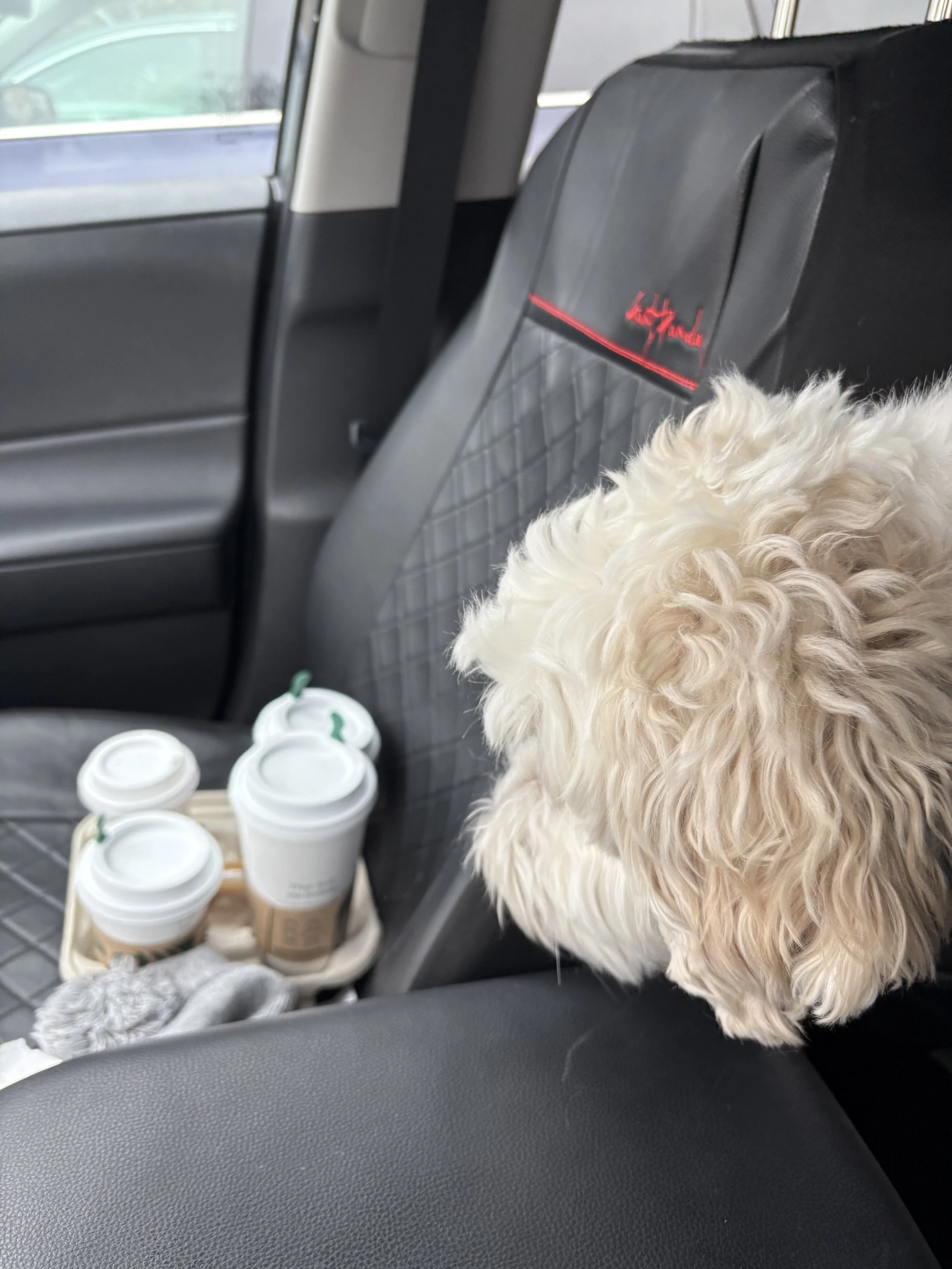
Happy belated Valentine’s Day! I had to share this picture of Libby loving the pup cup she got as a present!
I was shopping with a friend today for an auction basket and we were trying to decide what romcoms we should include. It turns out there are a lot of options!
If you haven’t seen and/or heard, Emily Henry’s book The People We Meet On Vacation was made into a movie by Netflix and came out several weeks ago. I have heard mixed reviews for people who liked the book better - as is often the case! But most people seemed to really enjoy it. I haven’t read the book but truly enjoyed the movie so now I’m on the waitlist at the library. I’m something like #63 in line! I better find some other things to read in the meantime!
I wanted to write today about how I feel like the romcom is making a comeback. Post apocalyptic and YA took the lead for a while there and then romantasy in the last couple of years has completely dominated the market. Hockey romance, including the recently released television adaptation of Heated Rivalry, is also taking the world by storm. But these past six months, and especially looking at the other books coming out in 2026, things are looking love-ly! I saw an excellent interview with Emily Henry about why she loves the romcom as a genre. She had a great point which is that even if the material is sometimes light, there is still true meaning and romance in it.
I do love other types of romance novels, dramatic, tragic, cliche, and the like. But I have loved romcoms for as long as I can remember. My first memory of reading a romance novel was a romcom, although I have no idea which one! One of the reasons I find them so valuable is that they are what I call “feel-good.” There is always strong romance, a creative hook, a challenging situation the couple has to go through. I do sometimes get tired of the third-act breakup but sometimes it just works so well! I also really enjoy reading romcoms because I think it brings hope. And yes, real life is not like a book or a movie, but it still gives us as readers hope and encouragement. No person is perfect and so when the romcom couple can see the flaws in each other and embrace them, I love to see it. I am a sucker for the “return to childhood home and find your love child” trope. I think a big part of that is probably the encouragement it gives me to believe in second chances.
I have been ruminating on why the romcom is coming back with such a surge and there are a couple of things that have been coming up a lot. For me, and for many people, romcoms have often been a good escape. When the world gets to be too much, or too overwhelming, we as readers can disappear into a story for a little bit. We know the story will have a happily-ever-after and so we can find comfort in that. When a book finally comes out, it has been in the works for quite a few years. So in this way it seems a little strange that now is the moment for it, when much of it was decided a couple years ago. Despite that, it has great timing. I think it’s a sign that strong romcom writers have been working hard and that we as people need a little hope and positivity.
I also have to say that I feel so lucky that we are having a romcom resurgence right now. The world feels dark, sad, hopeless, frustrating, negative, and scary right now. So any glimpse of light, anything that makes us laugh, any glimmer of hope, anything that brings us joy, is so valuable. It doesn’t fix the things that are broken, but it gives us a reprieve so that we can come back and face the world feeling better and stronger.
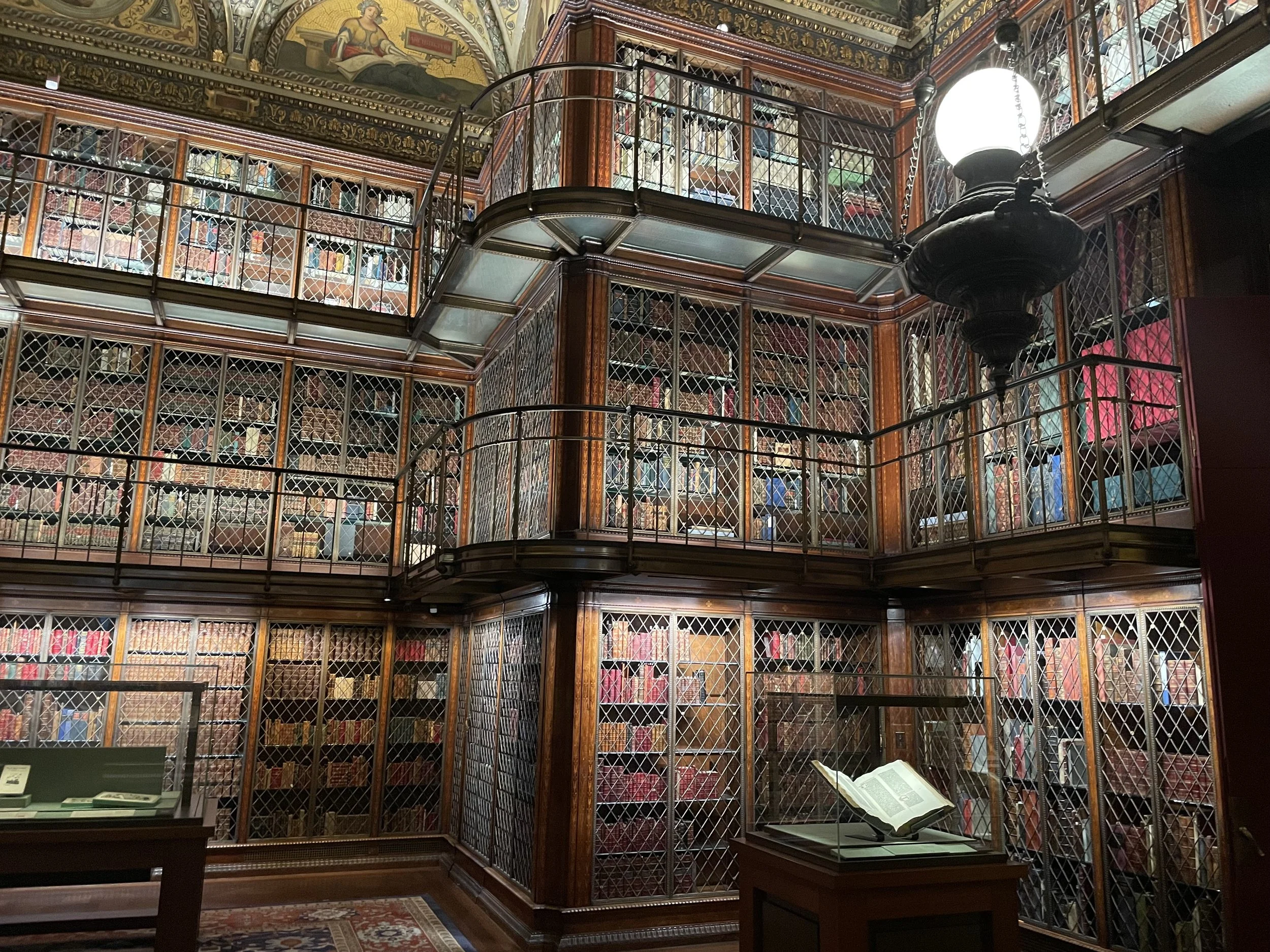
ARC Review: The Astral Library by Kate Quinn
“Art doesn’t exist to make you feel good…art exists to make you think. Great art, now - it will often make you uncomfortable”
In a book that could have been didactic and instead reaffirmed my belief that we can learn so many things from literature without it being in your face, The Astral Library is one of the best books I’ve read in the last couple of years.
“Art doesn’t exist to make you feel good…art exists to make you think. Great art, now - it will often make you uncomfortable”
In a book that could have been didactic and instead reaffirmed my belief that we can learn so many things from literature without it being in your face, The Astral Library is one of the best books I’ve read in the last couple of years.
Set in Boston, The Astral Library, and a multitude of books, paintings, and games, Quinn’s writing prowess stands out. The exceptional vocabulary and extensive knowledge of literature is phenomenal. I’ve never encountered a Kate Quinn book that I don’t like but I fell in love with this one when she referenced one of my favorite authors of all time, some of whose books are no longer in print. And it continued to get even better.
The Astral Library is about main character Alix, who is floundering in her life, searching for meaning, and a place to belong. When she discovers The Astral Library, she learns how much literature, libraries, and she herself, have to offer. Following Alix, The Librarian, a love interest, and a robust set of secondary characters, Quinn explores the value of libraries and what it takes to defend them. The Astral Library gives readers the chance to live in a book of their choosing and the people who have taken refuge in many of them are at risk. With the Librarian in the lead, she and Alix go on a journey to find those in trouble, help keep them safe, and discover who the real villain is.
The antagonists are rather vague for quite some time but when they appear in force at a tipping point, their purpose is indeed nefarious. The Librarian herself is a phenomenal character, who Alix sometimes struggles to understand but yearns to get to know. As a staunch defender of The Library, she goes to great lengths to do her job and maintain The Library’s integrity. Her character arc is one of my favorites, especially as someone who relates to her. The personification of books was so well done. I could feel their fear, joy, angst, and anger. It was such a fun embodiment of The Library. Perhaps the only thing that I didn’t particularly enjoy was the love interest story arc because at times it felt a little forced. I found it hard to see its added value, especially since everything else in the book was so on point.
One of my favorite parts of this book, and one of the things that made me laugh out loud, is that there are ghosts in The Library. They are people who have not entirely passed on because they’re still working on their TBR pile. I have rarely related to something more! I know many a book lover who feels they will never have enough time to read everything they want to.
The concept of The Astral Library embodies what every book lover dreams of - to step into a book. And how a book, or a library, can save you. This book was a manifesto about the power of libraries and the extensive knowledge, community, safety, and more that they provide.
Kate Quinn has accomplished a feat that not all authors can. She wrote a book with a deep and enduring message that is so pertinent to our time. Quite a few quotes stood out to me, some that were so on the nose that it was painful, and some that were so relatable all I could do was laugh. In a significant swerve from her historical fiction genre, Quinn shows her dexterity and mastery of the written word.
Many thanks to William Morrow and NetGalley for providing me with this advanced reader copy for review.
2025 Wrapped
I always love to see my Spotify wrapped when it comes out but it also makes me a little irritated that it comes out at the beginning of December! What about all the Nutcracker music that I listen to in the weeks after that!?
I always love to see my Spotify wrapped when it comes out but it also makes me a little irritated that it comes out at the beginning of December! What about all the Nutcracker music that I listen to in the weeks after that!? It’s partly for this reason that I always like to reflect after the year has actually come to a close. I want all the credit I can get, especially when it comes to how many books I read in a year!
2025 was a big year for me - figuring out that my passion was not in agenting but in editing, launching my freelance business, becoming an ARC reader, voluntering for The StoryGraph, and more. Even with a slow start, it has been meaningful to focus on something I am very emphatic about. I hope that people have learned more about why I am passionate about editing and how my knowledge and experience make me a good person to work with.
I joined the Editorial Freelance Association when I launched my business and I’m excited to share that I am going to be the chapter coordinator for the Carolinas chapter this year. I joined a writing group that is going to meet once a month, something I never imagined myself doing! Whenever people ask if I am going to write my own book, I always say I don’t think so. And that may still be true but I am excited to push myself and see what else I can learn through storytelling by creating my own work. I am also looking forward to all the fun virtual book club meetings that my sister and I host. I told them we might have to try having an in person meeting or reading retreat! There are also some other fun things in the works and I hope to share those things sooner rather than later.
As for my 2025 reading, it was quite a journey! My StoryGraph account says that I read 115 books this year but that is only the ones I remembered to record! Romance was my biggest genre and it ranged from historical romance, to romantasy and even some post-apocalyptic romance. In contrast, my second most read genre was WWII themed books. Some were fiction and some non-fiction. I am still in the middle of listening to Kate Quinn’s The Huntress. I’m so impressed so far, the complexity is amazing and well done. I listened to Heather Morris’ The Tattooist Of Auschwitz over the summer and it broke my heart and yet somehow also gave me hope. The world seems to be a mix of these two themes these days - the idealized joy and moments of love (romantic or otherwise) contrasted with the harsh realities of all our society is facing. I am always fascinated looking back by how my reading reflects my state of mind, my hopes and dreams, and what I look for moving forward. I hope that 2026 has a little more positivity and less harsh realities! We’re not off to a great start but it’s only the 8th so thank goodness there’s room for improvement. I am starting off the year with a Percy Jackson and the Olympians series reread since the second season of the show is out on Disney+. I’m loving it!
I have never been one to make major goals at the start of the New Year. It’s never been very successful or beneficial for me. Instead, I try to set intentions for the year. And so for 2026 I’m manifesting joy, hoping for growth in my business, excited to spend time with the people I love, and hopefully pushing myself outside my comfort zone. And I’m planning to read lots of books of course!
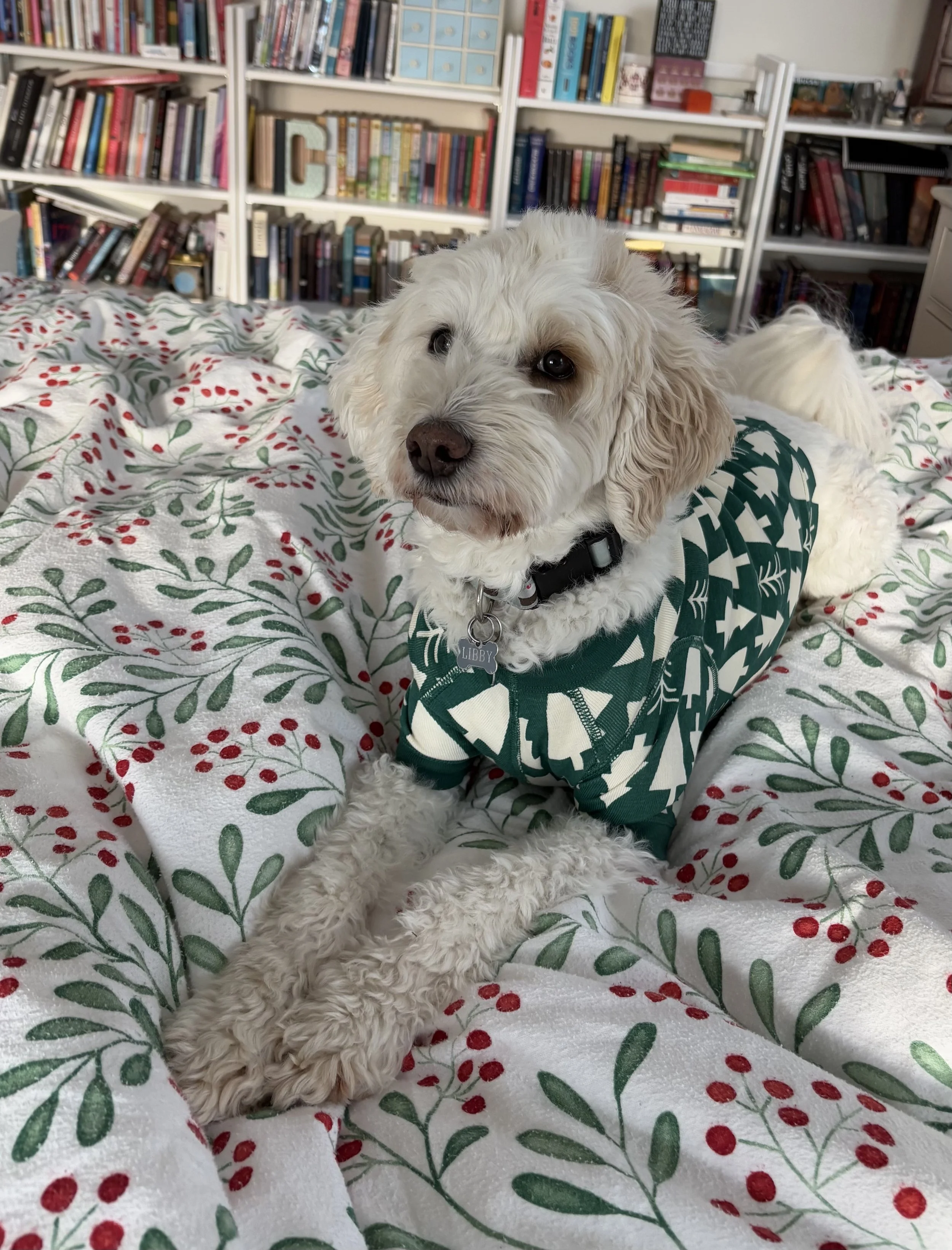
Christmas Reading Traditions
I laugh every time I watch the movie The Proposal. I laugh for a lot of reasons but especially when Sandra Bullock’s character Margaret shares that she reads Wuthering Heights every Christmas.
I laugh every time I watch the movie The Proposal. I laugh for a lot of reasons but especially when Sandra Bullock’s character Margaret shares that she reads Wuthering Heights every Christmas. On first thought, there are not many books that I can think of that make me feel less festive. Wuthering Heights is an excellent book but not really what gets me in the holiday spirit!
I love traditions and I am lucky enough to be in a family who has always had strong traditions and honored them. One of my favourite Christmas-time traditions is to read a lot of good holiday books. I read Jeff Guinn’s The Autobiography of Santa Claus every year. I have read it every year for as long as I can remember. It’s a fun story that follows a young boy who becomes Saint Nicholas and throughout time becomes a much bigger icon. He also acquires some interesting friends along the way, including the Wright Brothers, who help him learn to fly a sleigh.
I grew up with three siblings and a mom who loved to read so we were lucky to have lots of read aloud time! So some of my favorite Christmas stories are told in picture books. One of my all time favorites is Grandfather’s Christmas Tree by Keith Strand and illustrated by Thomas Locker. It tells the beautiful story of a young family at Christmas and their survival in rural Colorado. Funnily enough, we never grew up reading The Polar Express so the whole phenomenon is puzzling to me!
My siblings and I also laugh every year about a book that we have heard and read our whole life. The Dutch author Dick Bruna wrote a multitude of books and he is the one who wrote about Nijntje, the cute rabbit that has now taken the world by storm under the name Miffy. The book we read together every Christmas is his book The Christmas Story. And we don’t laugh at the story, as it’s a beautiful book and tells the story of Jesus' birth in an accessible way with simple but amazing illustrations. We laugh because the original Dutch version has so much more detail than the English translation. The Dutch version details what all the three kings are wearing, how much the angels sing and more. Just by looking at the same page side by side in each book, the English version has so few words. Cracks me up every time.
I read a new Christmas book this year which was Christmas With The Queen by Hazel Gaybor and Heather Webb. I thought it was a fun read but also had good emotional depth. I always enjoy a behind the scenes view of a famous or popular person. Even if that view is fictional! I like the idea of reminding ourselves that those are real people too. It’s one of the reasons I am loving the Taylor Swift docuseries!
I know that the end of the year is often used as a time to summarize the closing year and don’t fret, my 2025 wrapped is coming! But I’m too type A to begin before the year has actually come to an end. What if I finish a book on the 31st? If I summarize things before then, I might miss out on that data!
Happy Birthday Jane!
Today would have been Jane Austen’s 250th birthday and I love how much everyone is celebrating!
Today would have been Jane Austen’s 250th birthday and I love how much everyone is celebrating! Jane Austen House had the most beautiful wreath that they posted a picture of on Instagram. Emma Thompson spoke about Sense And Sensibility with the BBC. And this weekend some of my friends and I attended a high tea to celebrate Jane Austen through my favorite local bookstore, Main Street Books. They had great trivia, a fun book of Jane Austen wisdom for every day of the year, and the blueberry scones were delicious!
I sometimes think celebrating “would have been” birthdays are a little bit strange. Obviously those people are no longer alive but I think the reason they’re worth celebrating is because that person still has such a significant impact. Jane Austen was the original romance novel author for me. I had read the slow burn of Anne and Gilbert, Percy and Annabeth, and Harry and Ginny. But Jane Austen presented romances that had heroines with oodles of self confidence, loveable families that also drove each other crazy, and the concept of a brooding suitor. But she didn’t reduce men to that, she gave them depth and intrigue while focusing the story on a woman and her agency, independence, depth of knowledge, and more.
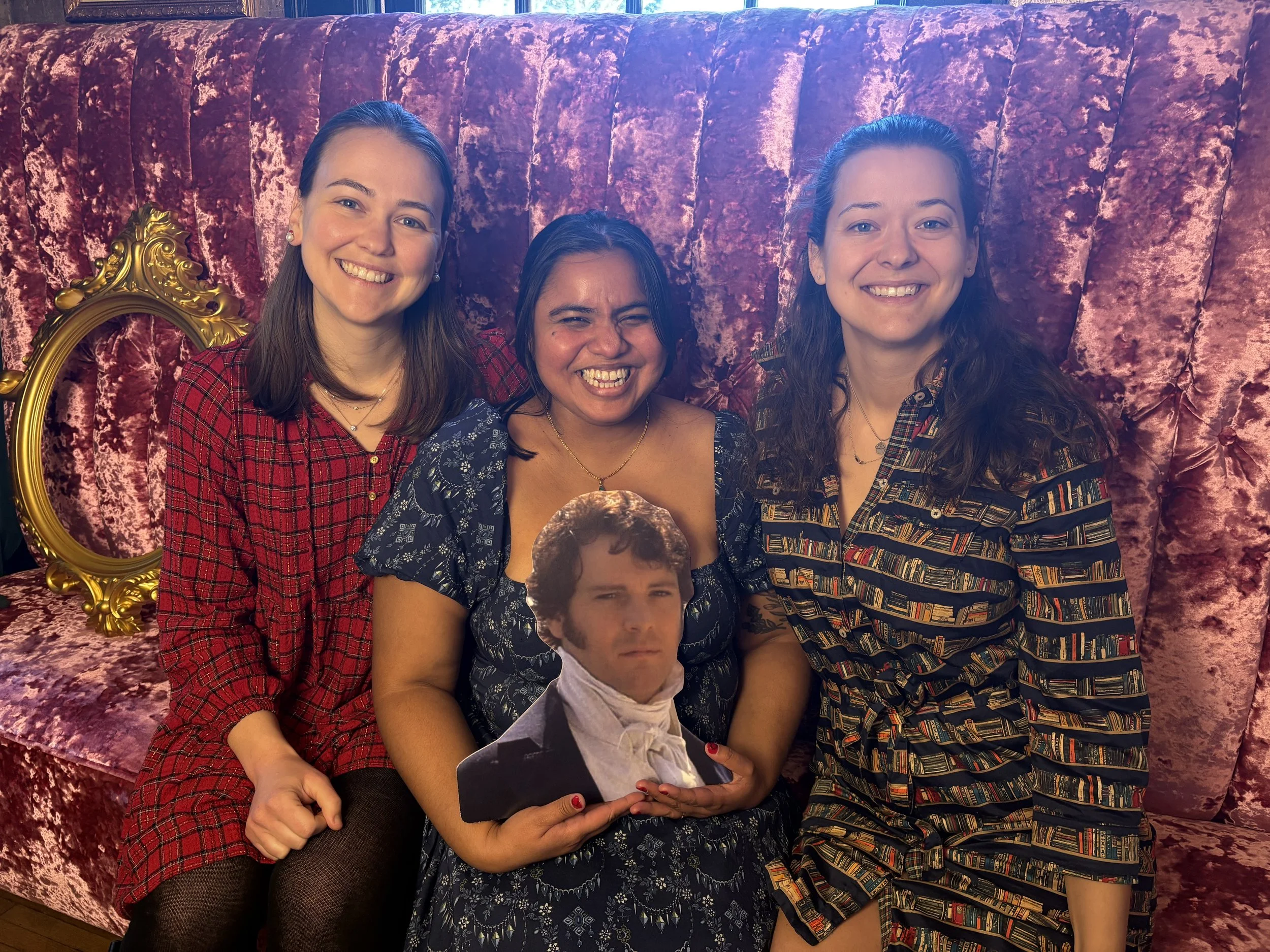
At the high tea over the weekend, there was a photography booth and they had a cut out of Colin Firth’s Mr. Darcy. I said something about Matthew McFadden and the photographer said it wasn’t her choice but she had gotten lots of feedback about his absence! I had a good laugh at that. Heated discussions about Firth vs. McFadden are something I always enjoy and I love to hear people’s reasoning.
I recently got the opportunity to see Austen’s Pride, an amazing original musical that is the story of Pride And Prejudice but with Jane Austen’s life as the framing narrative. It was so clever, funny, and beautiful. It’s no longer on tour but I’m anxiously awaiting the day it goes to Broadway. I’ll be there for sure! But not in regency dress, I just can’t wrap my head around the idea of wearing a corset for fun.
All the different variations and adaptations of Austen’s work display her staying power as an author and that readers can relate to her characters. But what I also love is that it really shows how everyone reads a story differently. The basics are the same but people all have a different experience. Some people have the major ick about Mr. Collins or find Emma a little irritating. And yet, we all find common ground in our love for Austen’s work. Some of my favorite Instagram accounts are about Jane Austen and always give me a good laugh - I’ll tag them in my Instagram post!
I can only hope that for the next 250 years and more people will fall in love with Jane Austen, her characters, and enjoy all she has to offer. Wherever she may be, I hope she’s enjoying a glass of madeira!
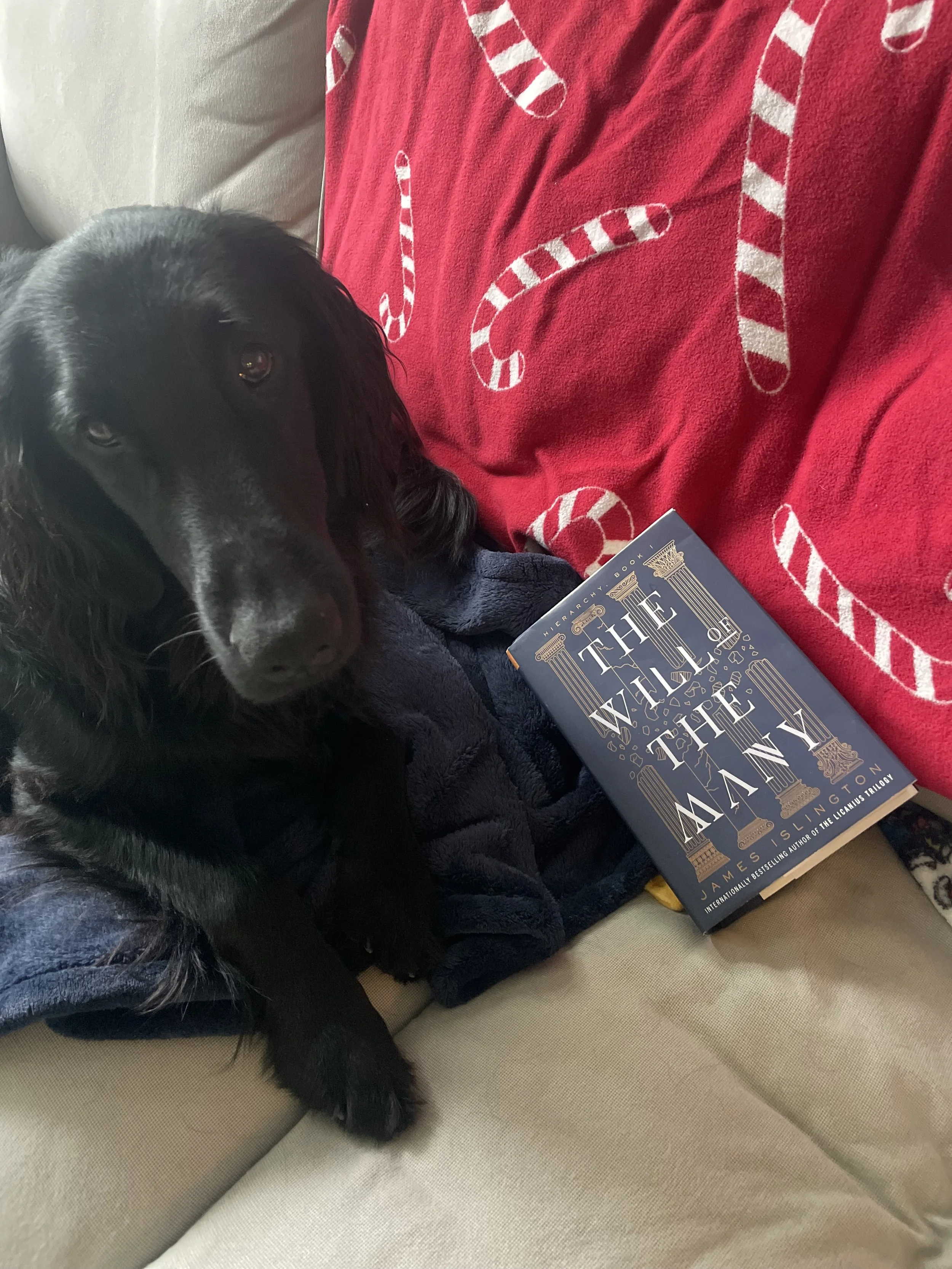
Book Review: The Will Of The Many by James Islington
I wrote this post on Monday but then I remembered that The Will Of The Many was what we read for book club so I held off in case I thought of anything else or there were things I learned that I had never thought of. And thank goodness I waited!
I wrote this post on Monday but then I remembered that The Will Of The Many was what we read for book club so I held off in case I thought of anything else or there were things I learned that I had never thought of. And thank goodness I waited! I decided to put my book club additions in brackets within my review because they brought up a lot of thoughts and it seems more complex to put them at the end. I also used people’s initials to talk about book clubbers.
I wrote at the end of October about how I love to reread a book and that was thoroughly reinforced when I finished James Islington’s The Will Of The Many last week before the sequel came out. The Strength Of The Few came out on Tuesday and I’ve seen great reviews so I’m not worried about content so much as the fact that I might finish it in one night and get no sleep. And once I finish, I will want the next one right away!
I’m excited to share my review of The Will Of The Many with you and I hope it inspires you to read it!
Here’s the deal. This first section is a spoiler-free review and then you can stop scrolling if you want when I get even more fired up about it and have to include spoilers.
Spoiler Free Review:
Last year I said that The Will Of The Many was one of the best books I have ever read and I stand by that. Islington’s command of language is excellent and his voice is amazing. I learned some great new words which must be more popular in Australian English than American English. We know right from the beginning that the main character Vis is not who everyone thinks he is, but solid in his own self and convictions. Islington kind of throws you into the world and its structure without a lot set up. However, he does so in a way where you learn the basics quickly and gain a strong and deep understanding as the book continues. The concept of Will as a source of power, a bargaining chip, and an intellectual challenge is really fascinating. I loved that we learned more about what kinds there are and what they do through character discussions and scholarly interactions. I’m intrigued to see what we learn about it in Book 2.
Part 1 of the book is, of course, a set up of the narrative but a lot happens along the way. We learn a lot about Vis as a person and what he values. We meet some of the key players in the story, such as Ulciscor and Lanistia.
Sidebar - listening to the audiobook versus reading the book was a hoot because some things are not pronounced at all what I expected like when I look at the spelling.
Like I said earlier, Islington launches you right in without a lot of setup. However, Part 1 does a really nice job at building that base but through plot development. Devices like having Vis study to gain entrance to The Academy help the reader discover the foundations of the world but they don’t feel didactic.
Part 2 is the most static in terms of setting, it almost all takes place at The Academy. I enjoyed this section because it pushed Vis to find his way amongst a community. He’s operated a certain way for so long and he cannot be solitary any longer!
Part 3 just blew my mind. Vis has to contend with his past, makes himself not very popular in order to do what needs to be done, makes new connections and loses others, and overall gets pushed to his limit. Physically, mentally, and emotionally. It’s a whirlwind that you can’t help but get caught up in and the ending is explosive, setting up an amazing new dimension to the series and makes you think you might not know anything.
STOP HERE - If you don’t want spoilers, don’t keep reading!
You’ve been warned.
I know I said it already but this book was so amazing and it blew my mind. The beginning where Vis is hanging from his dad’s bloody hand was such an auspicious start. I had to know more! I know quite a lot happens in Part 1 but I meant what I said above, I don’t think any of it is without relevance. Vis’ exposure to the Sapper, knowing another language, fighting for coin. It’s all part of what we need to know but I loved learning about it in this way. Things get started quickly then as he gets adopted by Ulciscor, moves to Villa Telemus and meets Lanistia. Who I am completely obsessed with, by the way. What a badass.
I could just feel the hope die in Vis’ chest when he learns at the Naumachia that Melior/Estevan isn’t the person he thought. And yet Vis is just so strong and he fights for what he thinks is right, especially based on what his father has taught him. I was so curious when he sees the visions when he grabs Melior/Estevan and then shocked that he has already resigned himself to death and stabs himself, making it look like Vis did it. Vis becoming so well-known after this made me laugh because I know the feeling of not wanting to be the center of attention at all and now everyone is going to know his name! I also laughed when Vis woke up and realized that he missed a week of studying and training. I’ve definitely woken up from a nap irritated that I had missed the opportunity to be productive!
As a setting, The Academy was so impressive. Islington’s attention to detail is impeccable and I really felt like I could imagine what it looked like. The mini-hierarchy system in the classes is so clear and for me it was the best way to really understand how the hierarchy functions. Vis’ entrance is just so on point, standing up for someone else and then getting in trouble. It also sets up his relationships with Callidus and Eidhin really well.
Islington’s description of the first ruins that Vis visits are almost too good. I felt like I could hear the people whispering “Obiteum is lost, do not open the gate.” I also really need to know what happened to their eyes because it obviously has something to do with what happened to Lanistia. I’m really curious how/when these ruins are going to come into play again in the future because we don’t see them again in this book. [When we were talking about this section, what came up was that Vis gets very lucky in this book. While he does have some setbacks, he succeeds at everything he does. As my brother pointed out, there wouldn’t be the possibility of future books if he dies or gets expelled. He said that Vis has that protagonist vibe where he makes a plan, executes it, and it just goes his way. It’s almost a little egotistical. Obviously I noticed how Vis has so many things going his way but I hadn’t looked at the book as whole like that.]
Also - I forget sometimes that the Festival of the Ancestors is in the middle of this section and what a situation that was! Sedotia’s reveal as Ulciscor’s wife Relucia was MIND BLOWING. I have so many questions! Is she playing the long game? How long has she been working with the Anguis? Clearly a political marriage but aren’t they expected to have kids? What big job does she have that keeps her busy? Can she really be so adamantly a part of the Anguis if she’s also wielding Will? Did she know who Ulciscor was before she married him? How did she find out about Vis and what else does she know? Any and all speculation welcome here if you want to email me. [Book club had lots of thoughts about this too!]
When Vis explores the other ruins on Solivagus on his way back, you know shit is getting dark. It was so eerie and I could just feel Vis’ sadness when the black spirals killed the spirits (or whatever they are) who tried to cross the great room without using the Labyrinth. What the spirits say about their history is also really intriguing - “attempted to gain synchronism.” I want to know what that’s about!
My friend KG also gave me one of my favorite laughs about this book when she was talking about the part where Vis saves the Alupi pup and names him Diago. She was going on about how Diago better show up again later because Islington spends so much time on that interlude and she was so over it.
This is turning out to be way longer than planned but I just have so much to say!
When Vis visits Suus with the other students from Class Three, it was such a good way to learn more of his history. But it was an interesting way to see how Vis had changed as well. His reconnection with some of the people he once knew was heartwarming but he has also clearly made strong connections with the people he knows now. I almost did a fist pump when he and Emissa finally kissed. I love when Indol doesn’t take shit from Vis and tells him that it’s clear Vis has been to the palace on Suus before. Vis’ conclusions about his history there made it a little easier for him to leave again. [KG said that she really liked the reconnection of Vis with the man Fadrique who had known Vis’ family and how he had collected some of Suus’ treasures to preserve.]
The rest of the book is just unbelievable and we learn SO many things. We know already that Callidus is concerned about the deaths at the Academy but when Vis challenges Belli to a game of Foundation, I was not expecting it to be so high stakes. And Vis, beating Belli after presenting the option of a draw, was ice cold. I almost couldn’t understand it. I know he had to move to Class Three and she needed to learn consequences but it hit me hard. I think we don’t know very much about Belli in the first place so to see her so emotional was shocking. [My brother pointed out here that Belli gets what she deserves. Vis has to get to Class Three but Belli blackmails one of Vis’ best friends which also results in Callidus being ostracized from his family. He really has a point and I feel less sympathy for Belli now.]
I really need to know what Veridius told Eidhin, Callidus and then Aequa when he talked to them before the Iudicium. When Eihdin tells Vis that he cannot participate, it’s such a moment of connection when he reveals his past. It reveals a lot about the hierarchy and how they overtook their enemies. The system is harsh and Eidhin bears the brunt of it due to his father’s choices.
The concept of the Iudicium is interesting but it’s Vis’ run of the Labyrinth in the old ruins that’s so crazy. It opens up a whole new world and I’m really curious where this is going next. Because obviously something fundamental about Vis has changed but he doesn’t even know what and we don’t either. [We talked a lot in book club about this series of events, especially Belli’s death. Belli wasn’t killed the way we would expect, by the Remnants tearing her to pieces. KS said that she wonders if someone else is there with Belli. She suggested that maybe Belli had already passed the Labyrinth and was trying to get back out. So for sure more to think about!]
The last parts of the book were so emotional. To find out the Anguis is involved and killing people unnecessarily isn’t unusual, they did that at the Naumcachia. But it’s especially worse knowing from Vis’ spying at Suus that Military is probably also involved. Emissa trying to kill Vis was such a charged moment [Some book club people think Emissa has been suspicious the whole time!] When my mom read the book, she kept telling my siblings and I that she loved Callidus and we would all just sort of grimace at each other. His death was gut-wrenching. Vis carrying him all the way to The Academy, talking to him, and then threatening Emissa and Veridius. I was overwhelmed!
When Vis has what feels like a fever dream about his father before he wakes up in the Infirmary, there might have been some tears from me. [And also some book club members for sure.] It’s such a turning point because Vis has so adamantly stuck to values his father taught him but he’s also learning new things from him even in death. Vis realizes he can no longer be somewhat complicit. If he wants things to change, he has to do something about it. I thought it was fascinating when he woke up and said he wanted to work for the Censor. It felt like coming full circle in terms of loyalty to Callidus but also him asserting his own self, not just someone who is doing the bidding of Ulciscor.
We talked a lot in book club about the ending of the book and decided that we ended up with more questions than answers. But it only made us want to learn more of the story rather than making us frustrated. SO said that she had waited to start the second one until after book club so that she didn’t confuse things. And IS didn’t say much since he’s almost done with Book 2!
Possibly my favorite thing that came out of book club was the deep and also hard discussion about how we view this social system and how Islington's social commentary is strong but also not one sided. IS pointed out that we have a variety of perspectives from different characters and so it forces us to really think about what we think makes sense and how different people justify their actions. Relucia isn’t someone I’m inclined to like but as IS pointed out, the title of the book comes from one of her speeches. And while Vis is the protagonist and someone that we can relate to more since we know more about him, I don’t agree with him about everything either. The world we live in today is filled with different perspectives, justifications and values. While people have a lot of strong feelings, part of what is lacking is the ability to understand where others are coming from. That’s a big part of why I love a book club and discussing books with other people. It forces me to think critically, examine my own beliefs, attempt to see things from another point of view, and overall gives me a better knowledge of the book.
Wow! That was a lot. But it’s also a book that provides so much to investigate, talk about, ponder over, and process. I started The Strength Of The Few a couple days ago and some questions have already been answered. But there are also even more! I’m excited to dive in and see where the story is going.
A World Where There Are Octobers
I was born in October…
I was born in October and even though I don’t like being the center of attention, Anne Shirley made me happy when she said “I’m so happy to live in a world where there are Octobers.” To me, October always means a season of change. I get a year older, fall begins (and sometimes ends depending on where you live!), I buy my planner for next year and I start getting excited about the upcoming holidays. I also just love an excuse to wear a sweater and heat up the barley bags that my grandma made for me. This year, the month was even more eventful than usual! My sister took her test to become a board-certified intensive care pediatrician, my aunt got a new puppy, my mom and aunt became Dutch citizens, I’m working on a book with a friend about his parents during WWII, and I went to visit Cornell and saw where my parents met. We also started getting ready for Christmas at Starbucks!
Among all of those fun things, I sometimes get overwhelmed and my way to relax is usually reading. I’m a comfort rereader. Some people watch Gilmore Girls every fall (which I do too!) but I tend to return to some of my favorite books. I’ve probably reread Heidi McLaughlin’s Forever My Girl series more than is healthy. What can I say - I love a happily ever after story! And I love that within the romance, her characters have depth, face true challenges and don’t take anything for granted.
The biggest reread for this month is James Islington’s The Will Of The Many. I listened to a lot of it on a road trip and then started over again with the hardback when I got home. I read it last year with my book club and it has gone on my list as one of the best books I have ever read. EVER. I could not get enough of it. I think my dog Libby thought I was crazy because we were walking miles and miles in our free time just so I could listen. And then when I finished the book, she probably thought I had gotten so lazy! Islington’s writing is just gorgeous - the detail, the flow and the overall story blew me away. I always love a reread of a book like this because I learn new things or notice things I didn’t the first time. It’s also why I love a book club. My brother came to the meeting last year because he had also read it. When he started talking about the theme of the number 3, I had some mind-blowing moments. I knew it was there but when he started talking, I had to seriously pause and think. And not get overwhelmed! But then I also had a mild meltdown when I saw an interview with Maude’s Book Club and James Islington on Instagram where Islington said the series is going to be four books. What the heck?! My type A self is going to have to get over it.
But, I am very grateful that the publisher Simon and Schuster is coming out with a reversible dust cover for the sequel The Strength Of The Few so it can match the art of the original The Will Of The Many hardback. The Strength Of The Few comes out on November 11th. As excited as I am, I’m not sure I’m ready! I read some amazing reviews but they also sound like I will have even more questions. I’m anxiously awaiting it but also trying to plan my reading. I can’t start in the afternoon because I might read all night! My younger brother did that with The Will Of The Many. Euan Morton absolutely crushed the audiobook of The Will Of The Many and thank goodness he’s back! Maybe I have to start there. I’ve also been loving, and laughing, while reading the hardback. A good portion of the names that are pronounced in the audiobook are spelled in a way I could never guess. On Islington’s website he says that he already knows the title of the third one and since “the strength of the few” was a line in The Will Of The Many, I’m curious to see if I notice anything! Stay tuned because I’ll certainly have a review when I’m finished reading. And I may have to read it again so I can process everything!
As October moves to November and kids start dressing like turkeys instead of the Kpop Demon Hunters, I’m excited to dive into some new books, maybe some new projects and prepare my baking lists for the holidays! I should probably also work on some Christmas present ideas…
Reflecting On Banned Books Week
Last Saturday was the last day of Banned Books Week, an annual event that was started in 1982 by the American Library Association to combat book censorship.
Last Saturday was the last day of Banned Books Week, an annual event that was started in 1982 by the American Library Association to combat book censorship. Throughout history, there have always been books that people disliked, fought over, or just destroyed due to the content. The goal of Banned Books Week is to raise awareness and fight for the freedom to read. Reading enables people to open up their minds, hearts, feelings, curiosities, and so much more. It is a means of learning that cannot be found in any other way.
On my Instagram page and on LinkedIn, every day I shared a book that I’ve read that has been, or is currently, considered a banned book. The lists are extensive, and in fact, rather alarming. Previously, there were smaller groups and individual people challenging and banning books. But today a majority of the book banning advocates are large focus groups, political conglomerates and even whole states.
One thing important to note is that a challenged book and a banned book are not the same thing. A challenged book is a book that someone has attempted to remove from being accessible. A banned book is one that has actually been restricted in its availability, being removed from school or public libraries. The list of challenged books is longer than is worth reading but its extent is absolutely shocking. It includes books about complex social issues but also picture books about a young girl’s experience with her own hair.
I recently avoided, luckily, an in depth discussion with the father of a friend of mine. He asked me how my work was going and what my ideas were about the extent of books these days. I told him what I know to be true - books give readers the ability to explore whole new worlds, enjoy different ideas, encounter strange things, but most importantly, they teach readers things. They teach readers things like how to be empathetic, how to understand someone else’ worldview, how to face challenges, and more. In Harry Potter And The Sorcerer’s Stone, when Neville stands up to Harry, Ron, and Hermione, we see an example of true courage. Any person would be hard pressed to suddenly become courageous just because someone told them how they should do it. Rather, the example of something makes it more understandable to us. My friend’s dad asked me why I didn’t think we could learn those sorts of things from reading about people who are like ourselves. We got distracted because dinner was served and so we moved on.
This encounter really struck me. In all my years of loving, studying, and experiencing literature, I have never been of the belief that reading about people exactly like myself was more meaningful or gratifying than reading books with characters I didn’t precisely relate to. Of course, I love to see myself reflected in Hermione Granger, or Jo March. But the books I read that challenged me, pushed me to think bigger and deeper, forced me to examine myself and the world around me, are some of the ones I enjoyed the most.
I wrote two theses in school, one for my undergraduate honors degree and one for my masters degree. Both of them focused on this very idea, that learning something from a book is a different kind of education. My undergraduate thesis examined the Harry Potter series and I put it into the context of C.S. Lewis’ Four Loves. I studied Aunt Petunia, and how she has love for Harry, even if it doesn’t look like love. I explored Snape, perhaps one of the most fascinating characters in reading history, and how his love manifests itself in ways we can barely understand. By studying these characters through the lens of something more intangible, I was able to better understand the intangible. I could see how love was present in my own life, even if it looked different than expected. I learned how to love others in a way I would not think of as particularly loving. I learned through a book what I could not have easily learned otherwise.
For my masters thesis, I expounded on what my undergraduate thesis addressed. I studied the theme of friendship in Tamora Peirce’s world of Tortall, which includes a variety of quartets and duologies. Even while Alanna was disguised as a boy, she built true friendships with her peers. Those friendships become even stronger as she shares her true self. She is an amazing example of how people can connect with other people without having a multitude of things in common. When Kel decides to pursue what she thinks is right, even at the risk of her reputation, we as readers begin to learn that doing the right thing isn’t always easy, or popular, but it’s meaningful and important.
Everyone reads a book differently and so I can understand that not everybody loves the same book. Or the same genre, time period, characters, theme, etc. But books are written by a variety of people and should be read by a multitude of people, who are then given the opportunity to learn something from it. They might learn a new fun fact, or a new part of history they didn’t know. But they might also learn how to be steadfast, or learn humility, or learn what it is like to live in someone else’s shoes. Banned Books Week is so vital for many reasons, but to me it is particularly important because when limiting books, you’re limiting knowledge. And not all knowledge is easily learned, or understood, or respected. But as a society, we need to remain steadfast in fighting for the freedom to read. It can, and will, change the future.
What Does A Developmental Editor Do?
Welcome to my blog!
Here is where I’m going to explore some of the different facets of my work, explain some publishing jargon and processes, and just share about books! And probably also some fun baking stories!
Welcome to my blog! Here is where I’m going to explore some of the different facets of my work, explain some publishing jargon and processes, and just share about books! And probably also some fun baking stories!
I’m going to start with what a developmental editor is and what they do. As some of you may have seen on my Instagram earlier this year, developmental editing focuses on the big picture ideas - character arcs, plot development, world building and more. But what does that look like? And how does it work?
When I am starting a developmental edit of something (usually a book), I begin by outlining my major topics:
Plot
Characters
Voice
Setting
Pace/Tension
Genre
As I read the book, I make notes, usually on paper but also sometimes in my head, about all of these things. Then when I finish the book, I expand my notes even more, especially now that I know the whole story. This gives me the ability to see how all these things develop throughout the manuscript. From here, I begin to analyze what works, what doesn’t work, and what could work better.
I’m going to use Rebecca Yarros’ book Fourth Wing for some examples here (MINOR SPOILERS!) Also fair warning, I have mixed feelings about this series from an editorial perspective. It has some amazing strengths but I find there are weaknesses as well.
When I’m looking at character development, I look at Violet and see that she begins as someone who is not very good at standing up for herself. And yet, she is well aware of her own weaknesses and has a strong desire to prove herself. By the end of the book, she has grown into her strength of character and knows what she believes is right and wrong. So while she does grow and change, as all good characters do, it is in line with who she was at the beginning of the book. Unfortunately, the end of the book does pose a bit of a problem for Violet as she struggles to find her strength in the midst of betrayal. As readers we have to wait for the story to continue in the hopes that Violet finds her footing again, and therefore remains a solid character.
This series is also a great place to examine the setting of a story. Every story has world building, but in fantasy it is often more creative. Every world has to have a set of rules. For contemporary fiction, those are things readers are often aware of: gravity means things fall, people can’t fly, etc. But in fantasy, all those things can change! In the world Violet inhabits, different rules exist. Dragons are real, people live with magical signets, and much more. So when I examine the book, I want to see the rules and how they work. Rebecca Yarros has a tendency to change the rules of her world (i.e. some people having more than one signet). While she may have a bigger plan for this in the long run, as readers we can sometimes find ourselves confused about how the world works. More is revealed about the signets in the second and third books so there must be a master rule about them in Yarros’ head somewhere!
Fourth Wing was so fun to read - it took me less than two days! So I am in no way saying that Yarros is a bad writer or that the book is bad. As an editor (and an overthinker), I like to look closely at a book and see what I can discover. But then there are also times when I’m so enthralled in a book that the editing side of my brain disappears!
When I asked what Ellie and Fourth Wing have in common, the answer is that Ellie reminds me a lot of Violet - she’s caring and fun to spend time with, but she also doesn’t mess around when she knows what she wants. You will always know when it is dinner time!
Although developmental editing focuses on big topics, it’s the details of those big topics that I focus on that provides the opportunity to improve the work as a whole. How does everything come together? How does it flow? Do I understand what is happening? Does it make sense? Is it well developed?